UNESCO handed over 15 drone detectors to the NUJU for journalists working near the front
Kharkiv region2 minutes of reading
Share:
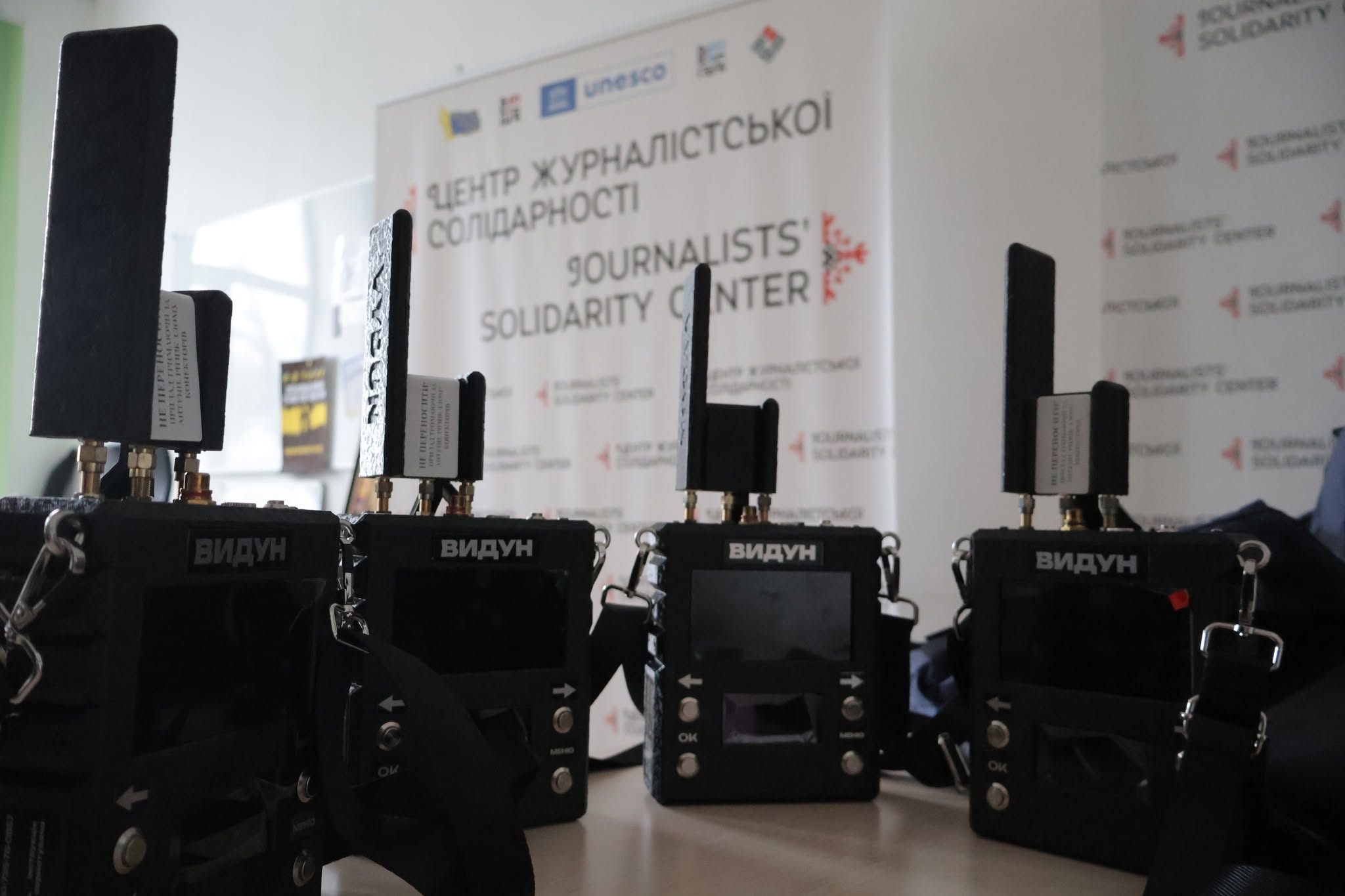
The National Union of Journalists of Ukraine received 15 portable Vydun drone detectors from the UNESCO Representation in Ukraine. The devices are intended for journalists working in war zones and frontline communities.
The detectors were handed over as part of the project "Protection of Independent Media and Information Integrity in Ukraine: Response to Emergency Situations and Sustainable Development", which is being implemented by UNESCO with the financial support of the Government of Japan. This is a continuation of the cooperation: earlier, NUJU received energy equipment and first aid equipment for journalists from UNESCO.
"Drones today are one of the most serious physical threats to journalists working near the front. From January to August 2026 alone, the NUJU documented 28 incidents related to drones that affected journalists, media workers, editorial offices and media infrastructure. At least five media workers were injured, and FPV drones attacked journalists already 17-20 kilometers from the front line. In several cases, the detector's early warning helped journalists find shelter. That's why we hand over these devices to colleagues who work in the area of the highest risk," saidSerhii Tomilenko, head of the NUJU.
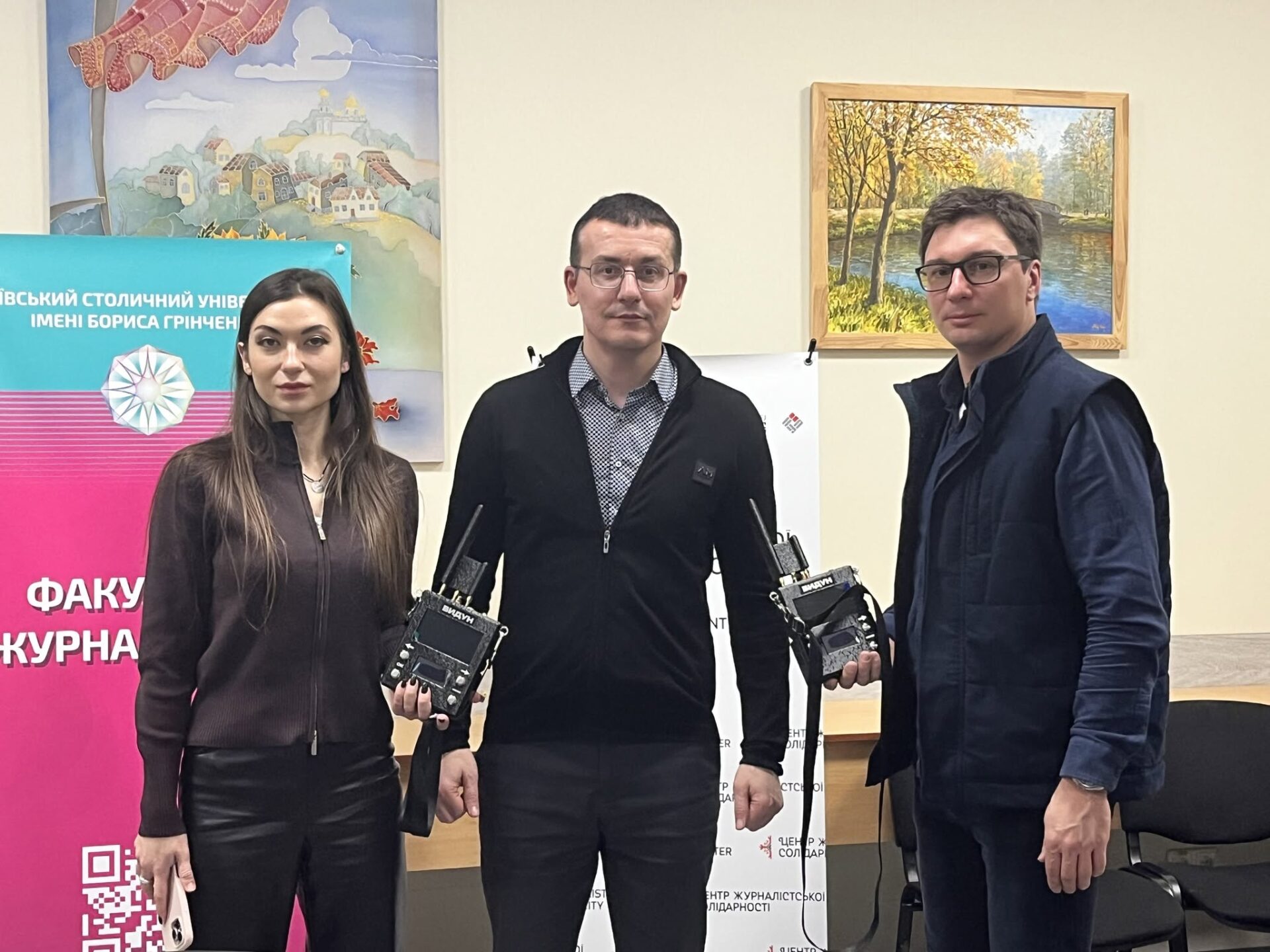
The first two detectors have already been handed over to war correspondents Iryna Sampan and Dmytro Vlasov . The rest of the devices will be distributed based on verified requests from editorial offices and journalists, as well as provided for short-term use through the network of Journalist Solidarity Centers. Before receiving the equipment, the journalists will be briefed.
"Vydun" is a portable detector of the Ukrainian company "BABAY". It scans several frequency bands, intercepts the analog video signal of FPV drones and displays the image from the drone's camera on the screen. According to the manufacturer, the device provides a circular view and can detect drones at a distance of up to 4 kilometers; actual range depends on terrain and transmitter power. The detector does not detect drones controlled via fiber optics, so it remains one of the security elements, not full protection.
Volodymyr Pavlov, co-coordinator of the Center for Journalistic Solidarity in Kharkiv, producer for international media, talks about his experience working with the detector:
"During trips to the frontline areas of Kharkiv Oblast, the drone detector detected the threat ten times. We had to stop, hide in shelters, stop work. Without sky monitoring, you are blind to many threats. The team working in the field must be equipped with a drone detector, preferably two different ones that will cover more frequencies. And, of course, you can't forget about fiber optics. The detectors are not yet able to detect it, so you have to have a separate person watching the sky next to you."
NUJU expresses its gratitude to UNESCO, the Government of Japan, the Embassy of Japan in Ukraine and the Ministry of Culture of Ukraine for the partnership and practical support of Ukrainian journalists.
Information service of the NSHU, photo of the NSHU
The primary source is the National Union of Journalists of Ukraine
The site uses cookies. The necessary ones are required for its operation (entering the cabinet, saving your choice). We enable analytical and marketing data only with your consent - in accordance with the Laws of Ukraine "On Personal Data Protection" and "On Electronic Communications". Consent can be changed or withdrawn at any time. For more details, see the Cookie Policy and Privacy Policy .