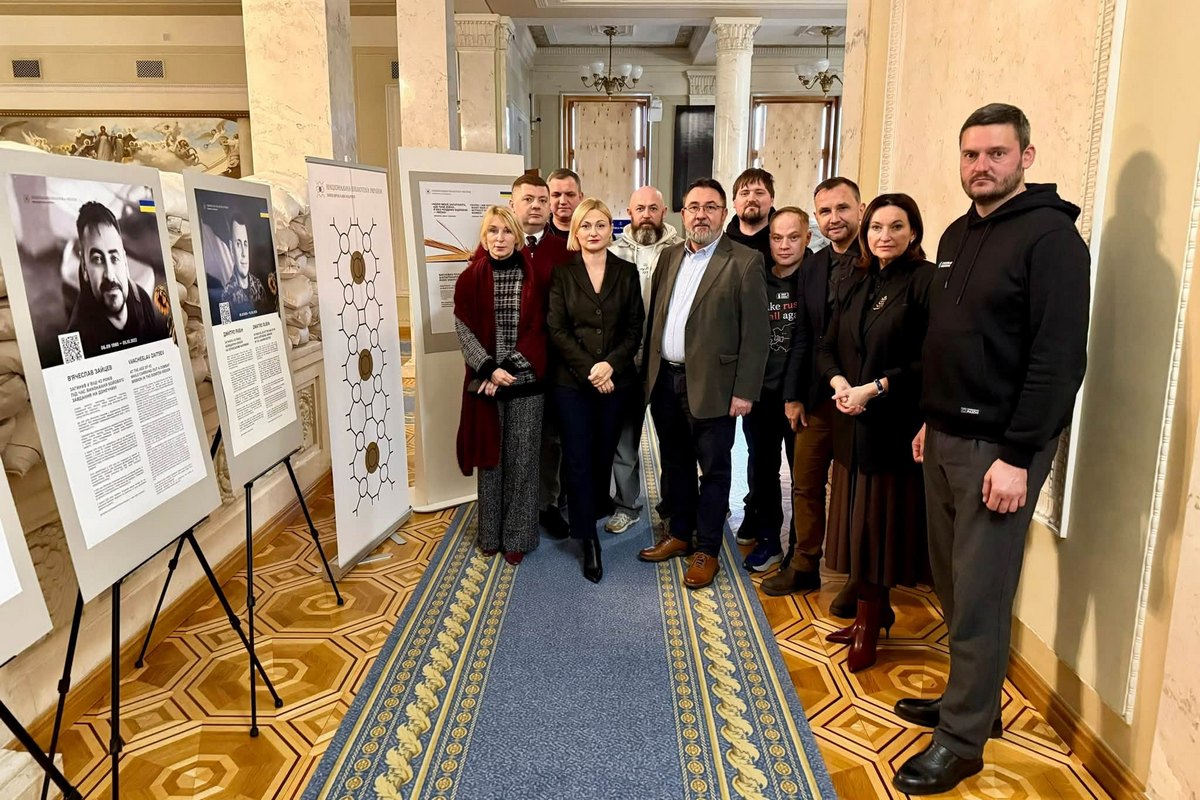
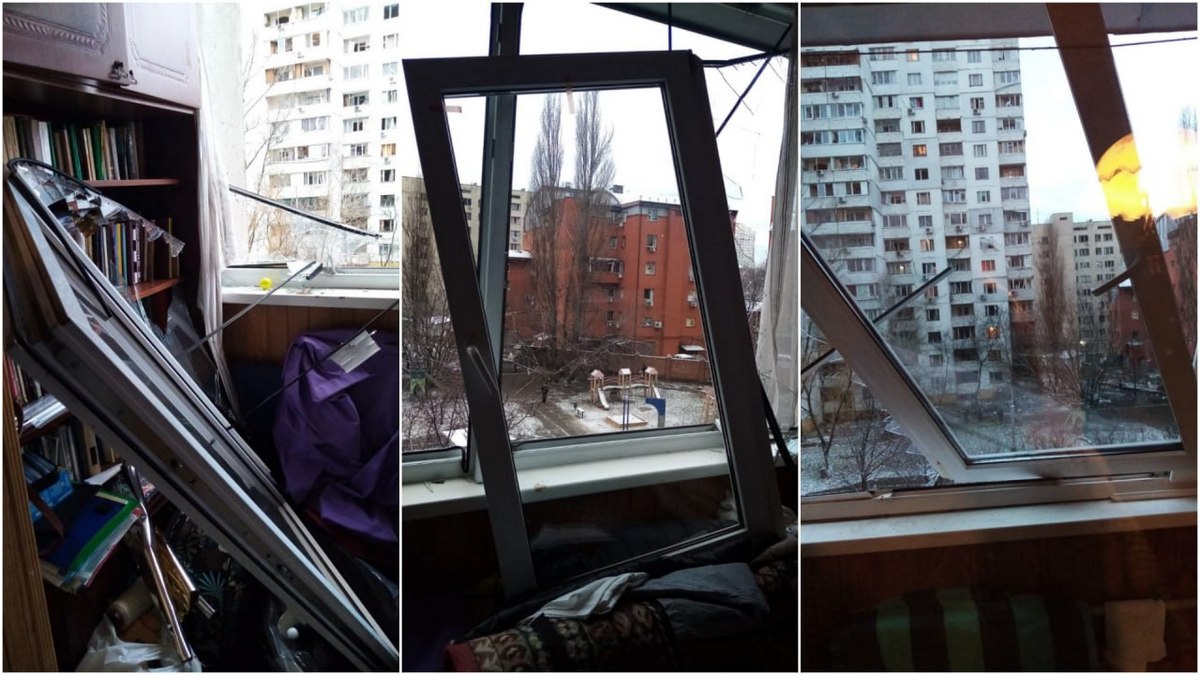
How and why a local conflict in a few hours can become the basis of a nationwide and later an international information campaign was discussed using the example of the events of November 2 in Petropavlovsk Borshchagivka at a joint meeting of the Verkhovna Rada Committee on Humanitarian and Information Policy and the Temporary Investigative Commission for the Investigation of Crimes Committed by Armed Forces of the Russian Federation against Journalists on November 24.
The head of the TSK, the deputy head of the Committee Yevgenia Kravchuk emphasized that the situation was saved by professional journalists.
- The mass psychosis in the information field was broken because journalists came to the scene and found out who the "doctor" was who started the scandal, and where she got the ambulance, - said Yevgenia Kravchuk.
She also noted that the state partially legalized the provocation itself, when the first people arrived on the scene, followed by the world media. According to Kravchuk, people are tired of the war, and due to emotional exhaustion, critical thinking weakens.
The chronology of events in the information space was presented by Anait Hoperia , acting director. head of the Center for countering disinformation at the National Security Council. The first calls to go to the house, where allegedly the military kept beaten civilians, appeared at 11:34. At 12:41 a.m., false reports of an alleged 40 people in the basement spread. At 1:57 p.m., the first wave of Russian publications began, and around 2:00 p.m. Facebook recorded 361 posts with the same text. As of the evening of November 3, there were almost 14,000 publications, which together received about 53 million views. Later, the event was used for a narrative about "a network of secret prisons in Ukraine." From November 2 to 19, more than 22,000 such publications with more than 120 million views appeared in the Russian segment. In the Ukrainian segment, there are more than 14,000 publications and about 78 million views.
Ihor Solovei , head of the Center for Strategic Communications SPRAVDI, called the Ukrainian information space a "passage yard". According to him, any "information scoundrel" can blow it up. At the same time, the classical media showed in this situation "what they are loved for": fact-checking and verification of information. Solovei also admitted that the domestic conflict was largely brought to the national level by the presence of high-ranking officials.
Journalists told how they worked on the spot. Sofya Afonina ("Investigation.Info") explained that the editorial office started checking from a private ambulance. It turned out that the company whose symbol was on the car has not existed since 2023. Daria Grigorenko ("Suspilne Novosti") said that the editors did not publish unverified statements until they received official comments. Yevhen Buderatskyi ("Ukrainian Pravda") drew attention to the fact that Telegram channels referred to "local mass media", although there are no local media in Petropavlovsk Borshchagivka and neighboring villages. He called to find out who is behind the anonymous channels that spread the topic. The participants of the meeting also expressed regret that the SBU representatives did not take part in the work of the TSK this time.
The Chairman of the Committee and the President of the OSCE Parliamentary Assembly , Nikita Poturaev, emphasized that the problem is deeper than communication difficulties. He called one of its roots shadowy schemes of facilitating evasion of mobilization.
- We do not have a protocol for such cases. Everything we saw shows that the Russians have a (information) machine, it works every day and picks up any of our events in a matter of minutes. And we don't have a protocol, and that's bad, said the parliamentarian
Yevgenia Kravchuk reported that TSC plans to ask to extend its mandate for another year and continue to work on countering disinformation and systematic crisis communications.
Oleksandr Kharchenko , a member of the board of the National Union of Journalists of Ukraine and the head of the communications department of the National University of Ukraine, commented on the results of the meeting . Here is the full text of his comment.
Budanov and Pivnenko will not reach every community, or Lessons of crisis communications after Petropavlovsk Borschahivka
The experience of recent years and the discussion at the meeting proved, in my opinion, that we have by no means a shortage of correct proposals to counter Russian disinformation. Instead, we have a problem with bringing these proposals to effective mechanisms.
Deanonymization of opaque telegram channels, limitation of advertising streams, transparency of state spending on information campaigns, operational official information during crises - all this has already been discussed, proposed, became the subject of legislative initiatives and professional discussions.
Therefore, the question today is not only what else to offer. The question is why, after years of discussions, we still do not have effective mechanisms. And the case of Petropavlovska Borshchahivka showed this quite convincingly.
First. Responsibility for the word and transparency of Telegram channels.
The issue of telegram regulation has been at the parliamentary level for at least two years. Bill No. 11115 was registered as early as March 2024. It was discussed, revised, its review was postponed, and the need for regulation was recognized by representatives of various authorities. But as of today, the decision has not been made. So when we talk again about the responsibility of opaque information platforms, let's be honest: the problem is not that the state does not know what to do. The problem is that for two years she cannot bring this decision to the end. People's deputy of Ukraine, one of the authors of the bill, Mykola Knyazhytskyi, spoke about this, in particular, at the meeting. I completely agree with him, no matter what number the bill gets, no matter how much effort we put into its improvement, but we urgently need to find a legally justified mechanism for the transparency of ownership and responsibility of resources that claim the role of media, but do not want to be responsible for their publications.
Second. Who finances the information chaos?
Anonymous channels are primarily a business. A ban on advertising (especially political, government or big business) in channels without a verified owner will deprive them of a financial basis for promotion and buying traffic. That is, the blow should be aimed at those who pay money, and not at the messenger himself. But how to ensure the transparency of the advertising market, the responsibility of advertisers and intermediaries, and real mechanisms for limiting the financing of non-transparent resources?
Since advertising revenues in the same Telegram channels come from two sources - separate payments from budget funds and "working" cash that is difficult to track, there are obviously two ways.
First of all, ensure full transparency of all budget payments for digital information - with the possibility to check to whom, for what, on which resource and on the basis of which contract the money was paid.
A separate issue is economic incentives for advertisers. We have to find a legislative mechanism that will make it impossible to tax the costs of advertising in anonymous resources. This is not a ban on advertising per se, but the creation of economic incentives in favor of transparent, responsible media.
As for the payment of "telegrams" in cash, Finmonitoring and NAZK should have their say here.
The third. The state should stop strengthening anonymous channels itself.
Officials, law enforcement officers and others should finally reconsider the practice of "downpours" to anonymous publics. The events of November 2 showed that the bet of state bodies or individual law enforcement officers on "friendly" anonymous publics does not work in crisis situations - at the moment of an emotional surge, the same channels begin to spread panic and unverified rumors for the sake of traffic, playing along with the hostile IPSO.
Therefore, a clear standard should be introduced at the level of state authorities and the power bloc: the priority is to inform only verified, registered media.
We understand that the combined audience of the five largest anonymous Ukrainian Telegram channels is about 10.8 million subscribers, and the five leaders among the official verified media have a total of approximately 2.1 million subscribers, that is, the top anonymous audiences outnumber the leading editorial media by more than 5 times. But, agree, 2 million active and high-quality audience is also a lot. In combination with the previous steps, it will give its results.
The fourth. Real crisis communication.
Methods of crisis communications have existed for a long time. But the events in Petropavlovska Borshchagivka demonstrated that the existence of methods does not guarantee their implementation.
A mandatory interdepartmental standard of operational information is needed. Within 30-60 minutes after a high-profile event, society should receive initial official information: what is known, what services are working on the spot, what is being checked and when the next notification will be. There is no need to wait until everything is known. It is necessary not to leave people in a vacuum, which is instantly filled by bloggers, rumors and manipulators.
Likewise, it is obvious that the practice of operational accredited press pools should be developed in crisis situations - under the condition of security, so that professional journalists can receive and transmit to society a verified picture of events. Provide access to the scene or participants of 3-5 journalists from the leading and local media, accompanied by a press officer, and there is a significant chance that the public will get an objective first-hand picture, which will defuse conspiracy rumors. Of course, there will be complaints from other media that did not make it into the pool. But when events develop in an unpredictable direction with lightning speed, it can be a way out of the situation.
Fifth. Crisis communications should work on the ground.
The presence of Deputy Head of the Office of the President Kyryl Budanov and Head of the National Guard Oleksandr Pivnenko received significant resonance during the events in Petropavlovsk Borshchagivka. But Budanov and Pivnenko will not be able to reach every Petropavlovsk Borschahivka, if it is somewhere in the Chernihiv or Cherkasy regions. Banal, the speed of movement of Budanov-Pivnenko is lower than the speed of information dissemination through telegram channels. In addition, the involvement of the first persons of the state artificially increases the political weight of the provocation.
Therefore, there is no doubt that the powers, training and responsibility of regional press officers and spokespersons of law enforcement agencies should be strengthened. Crisis communication should work where the problem has arisen, not after it has become a national scandal.
The sixth is last but not least, or another, to some extent, non-obvious conclusion.
According to the analytical report of the NUJU, about 33% of surveyed residents of front-line communities trust the local press the most, and among personally authoritative media persons, one third are regional journalists and bloggers. IRMI data are similar - people trust local media and local social media channels more than national ones. So, no matter how much it hurts someone's ears, institutional and financial support of local media is also a fight against disinformation. Therefore, targeted state programs and the involvement of international partners are needed specifically to preserve local newsrooms, especially in frontline and de-occupied territories.
And here we again return to the strengthening of crisis communications on the ground. It is necessary to establish direct, fast and equal access of regional journalists to official speakers.
Finally, what awaits us next is no less dangerous.
So we have to act preventively. Because tomorrow this problem will add to the headache with Telegram channels.
The trend of disguising Russian propaganda as authoritative world and Ukrainian media (media impersonation tactics, recorded in the NewsGuard report) is critically threatening. It is rapidly destroying the very foundation of media literacy – trust in a proven brand.
According to analysts, within the framework of operations Doppelganger, Matryoshka and Storm-1516, Russians have created about a thousand fake materials in the name of 163 real media in recent years (in particular, Euronews was faked 82 times using AI cloning of journalists' voices).
It goes without saying why this trend is particularly dangerous.
First of all, the basic filter of critical thinking is broken. People used to be taught: "Don't believe anonymous people, check if the BBC, Euronews or Suspilna wrote about it." Now the enemy gives the audience a ready-made video plot with a corporate logo, graphics and the voice of a famous presenter. The average user in social networks does not go to the official website of the media to check whether this video was actually released.
This is also, if you like, poisoning the algorithms of artificial intelligence, because the mass "seeding" of the Internet with such clones has another hidden goal - to force language models and AI search engines to read these fakes as reliable facts, referring to supposedly authoritative primary sources.
Finally, this is a double blow to the reputation. Such omissions at the same time discredit Ukraine in the eyes of Western partners and undermine the trust of Ukrainians in their own and international journalists, creating the effect that "the truth does not exist at all."
How can the state and the media play ahead?
Instead of catching up with every single deepfake with rebuttals (which always reach a smaller audience than the fake itself), one should act preemptively at different levels.
No matter how fantastic it sounds today, care should be taken to implement digital content authentication standards (the Content Credentials / C2PA initiative). How does it work? Every real video story or photo released by the editors receives an invisible digital signature. If the video is edited, dubbed by AI or created "from scratch" under the logo of the TV channel, the platform or browser will automatically mark it as unverified.
Preventive information also takes on a new meaning when, instead of refuting specific fictional stories, the deception technology itself is systematically explained to the audience. The editors themselves should regularly show examples of how easy it is today to clone an announcer's voice or fake subtitles on the air and on social networks. When the viewer knows that such a tool exists, he turns on skepticism about any scandalous "exclusive" in the news feed, even if there is a familiar logo.
Finally, despite all the complexity of the process of negotiations with the world's technogiants, we must take care of the quick response protocols "editing - regulator - platform".
Today, removing a fake story from TikTok, X (Twitter) or Telegram can take days, during which the fake gets millions of views. But if it is possible to agree that when a media detects the theft of its brand and identity, such content will be blocked not as "disputable information", but as copyright infringement and fraud (impersonation), it will be a great victory.
Information service of NUJU