The authorities inform, the media explain: that the front-line newsrooms learned about their audience from a study by the NUJU
Kharkiv region5 minutes of reading
Share:
Why security "nearby" is of more interest to readers than the general course of hostilities, why a telegram is only a method of delivery and not a news author, and what is the unique role of a local newspaper today - this was discussed at the final online educational meeting of the participants of the NSSU Frontline Press program.
The main topic was the presentation of the study "Information needs of residents of the front-line territories of Ukraine" , for which the participating editors surveyed their readers at the end of the summer.
Safety nearby weighs more than the big picture
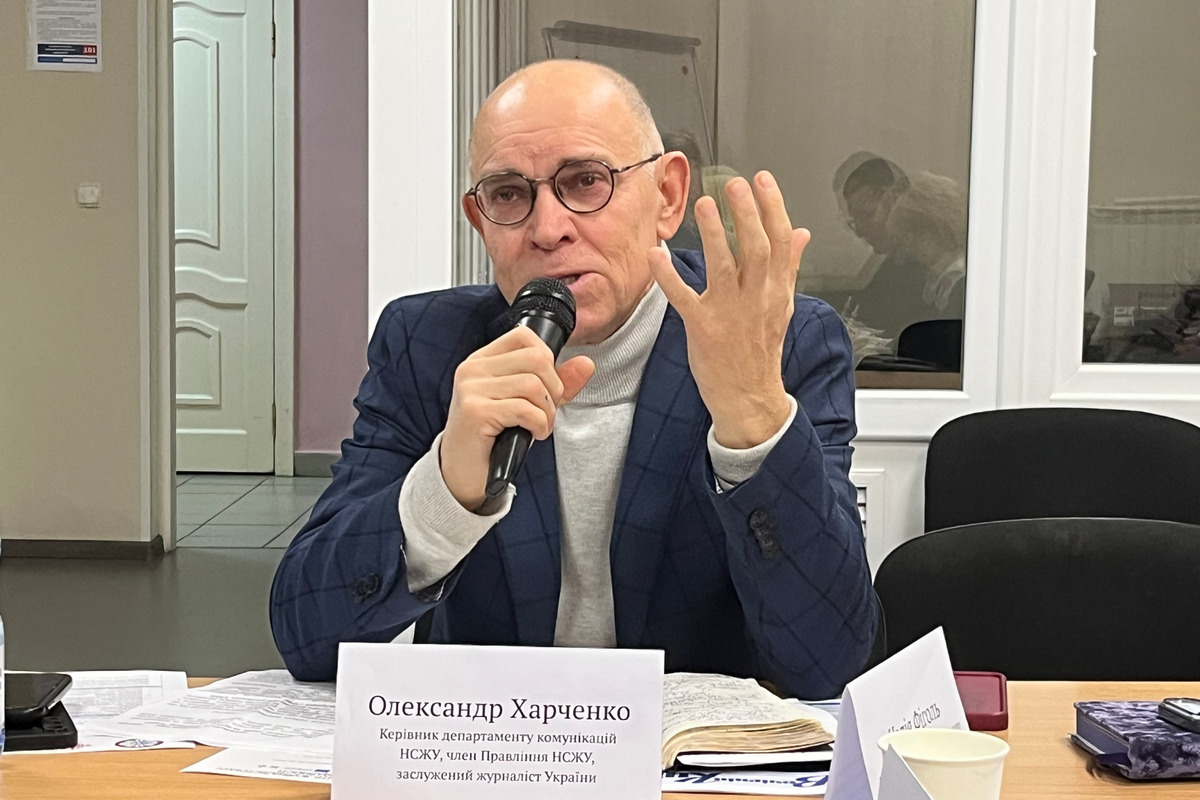
The results were presented by Vitaliy Golubev , secretary of the NSHU, one of the authors of the study ( Serhii Tomilenko , Lina Kush and Iryna Khromenko worked on the report together with him). From August 10 to 24, 31 local media from Dnipropetrovsk, Donetsk, Zaporizhzhya, Mykolaiv, Sumy, Kharkiv, Kherson and Chernihiv regions collected answers from 613 respondents. 57.6% of them lived under the regular threat of shelling during the year, a third changed their place of residence after February 24, 2022.
Vitaly Golubev. Photo: NUJU
Vitaly Golubev emphasized: the sample is not representative, so it is a journalistic, not a sociological study. However, his results largely coincide with the data of sociologists, in particular with a recent study by Internews .
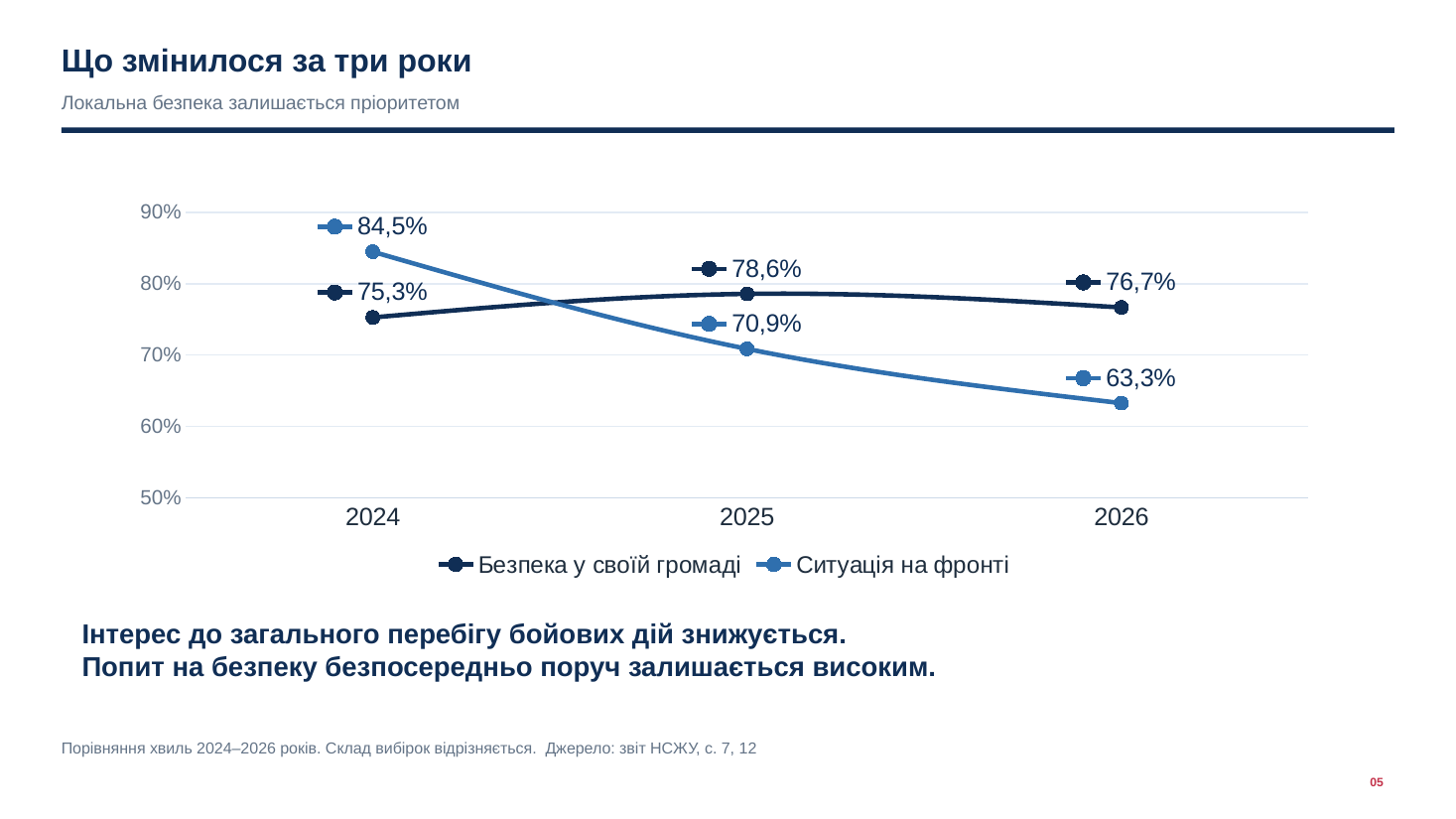
People are most interested in safety in their community - 76.7%. This indicator has been stable for three years. But interest in the situation at the front is generally decreasing: from 84.5% in 2024 to 63.3% this year.
The third place among the topics (47%) is the activities of the authorities and the local budget: people want to know where taxes and international aid go. According to the researcher, this is a real "Klondike" for journalistic investigations. There is also a lack of safety information: only 46.5% of respondents consider it sufficient.
In open-ended responses, people ask for practical benefits. "Topics that help a person solve a specific problem: from security to household or financial," wrote a woman from Kharkiv region.
- If there are no such explanations in the local information space, artificial intelligence will not give a concrete answer either. Where to go, who to turn to, what payment schedule - this is where the primary role of a journalist appears, Vitaliy Golubev is convinced.
Telegram is a delivery method, not a news author
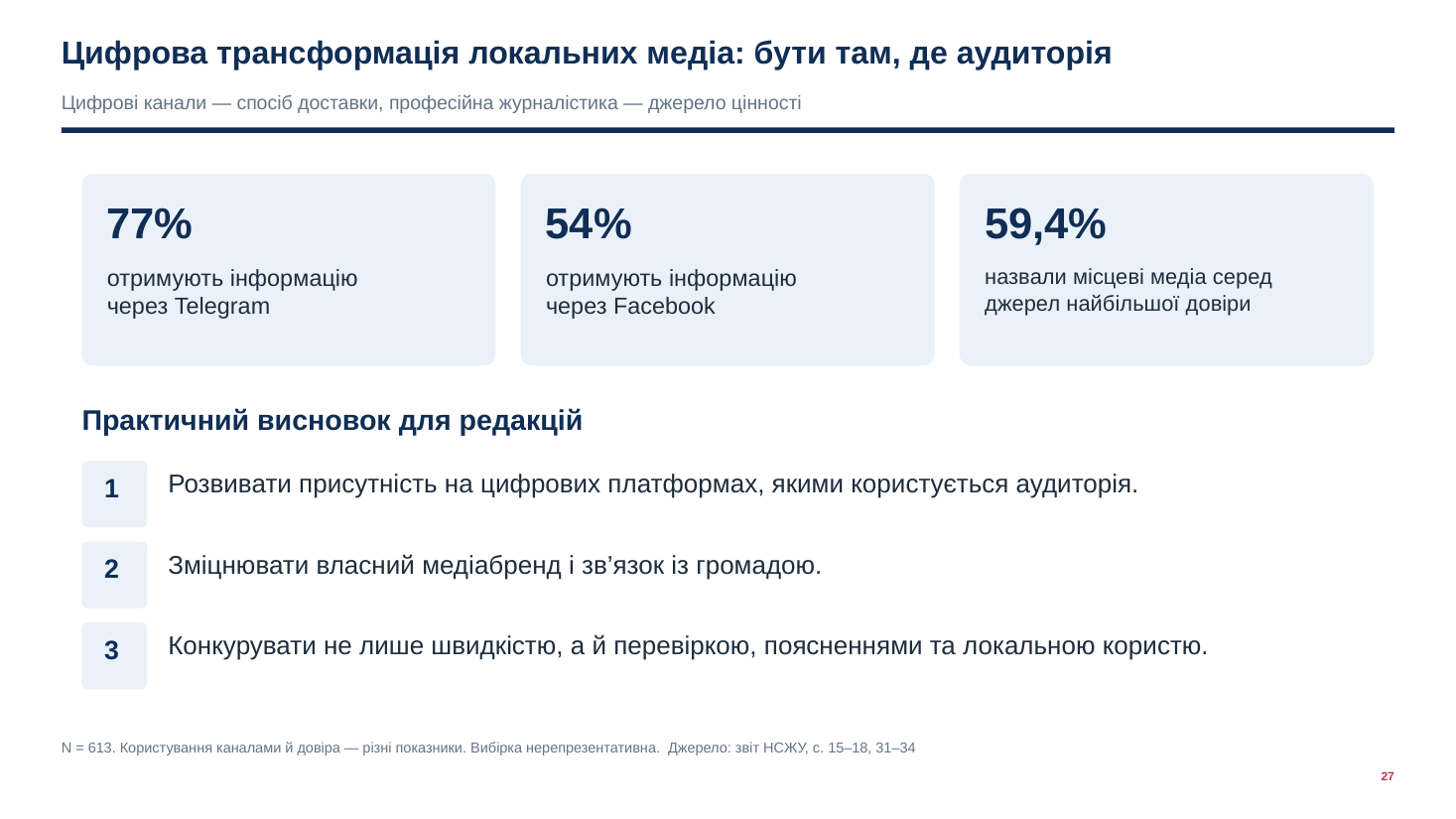
Respondents most often receive information about the community from Telegram (77%) and Facebook (54%). However, when asked to name specific sources, 66.8% of respondents mentioned at least one professional local or regional media brand.
- A delivery platform and a content producer are different things. To a large extent, we are the same Facebook or Telegram, - explained the researcher.
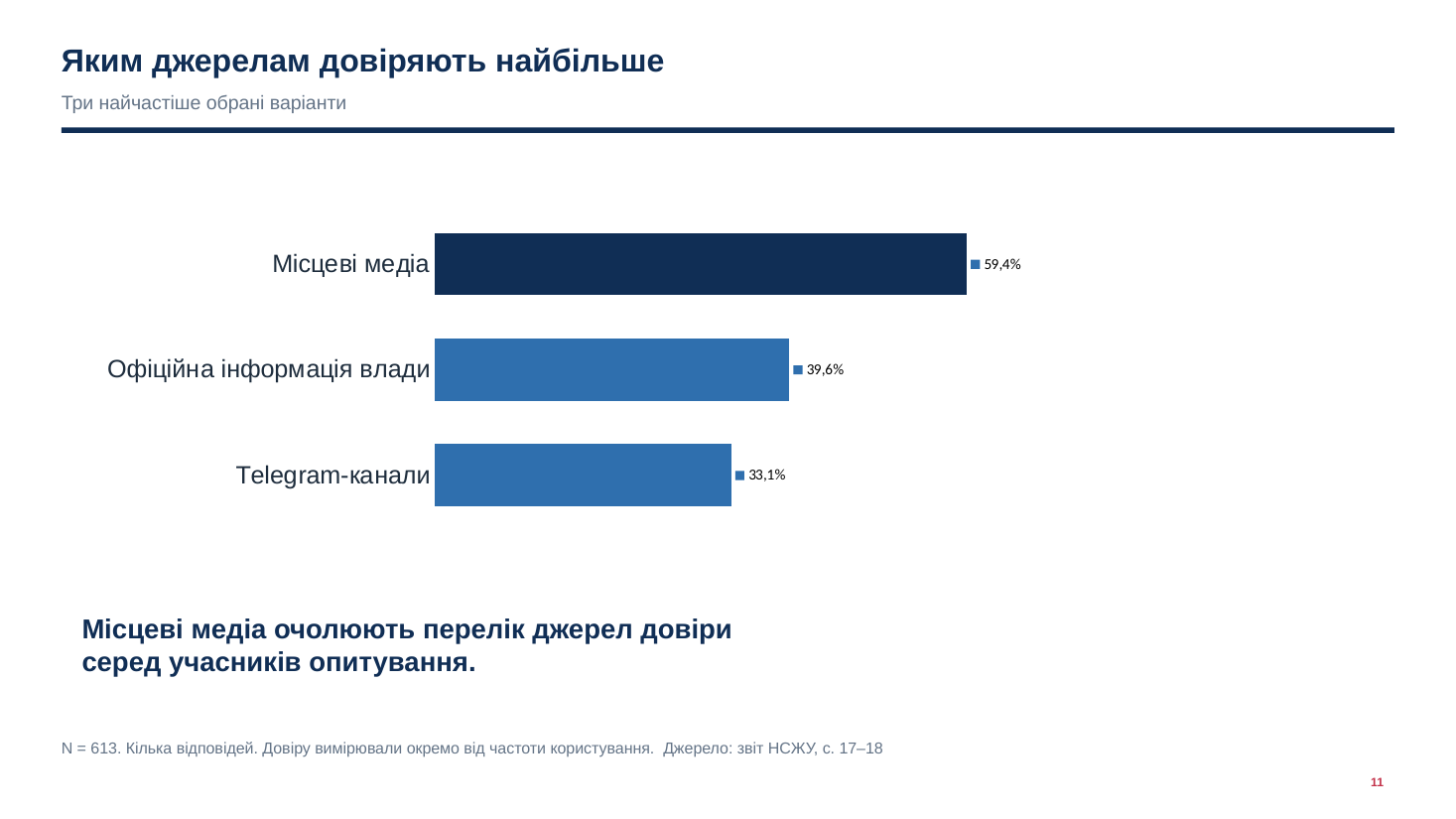
People trust local media the most - 59.4% of respondents chose them. Official government information is trusted by 39.6%, Telegram channels by 33.1%. "The greatest prevalence does not mean the greatest trust," Vitaly Golubev concluded.
Local media lead the list of trusted sources
Priorities for editorial offices
The authorities are increasingly communicating with people directly - through their own websites, Telegram channels and pages. The chain "authority - journalist - audience" is reduced to "authority - audience", so simply reprinting official messages has almost no value. At the same time, only 37.2% of the respondents consider official information accessible and understandable, and the most lacking is data on security, humanitarian aid, social benefits and compensation for housing.
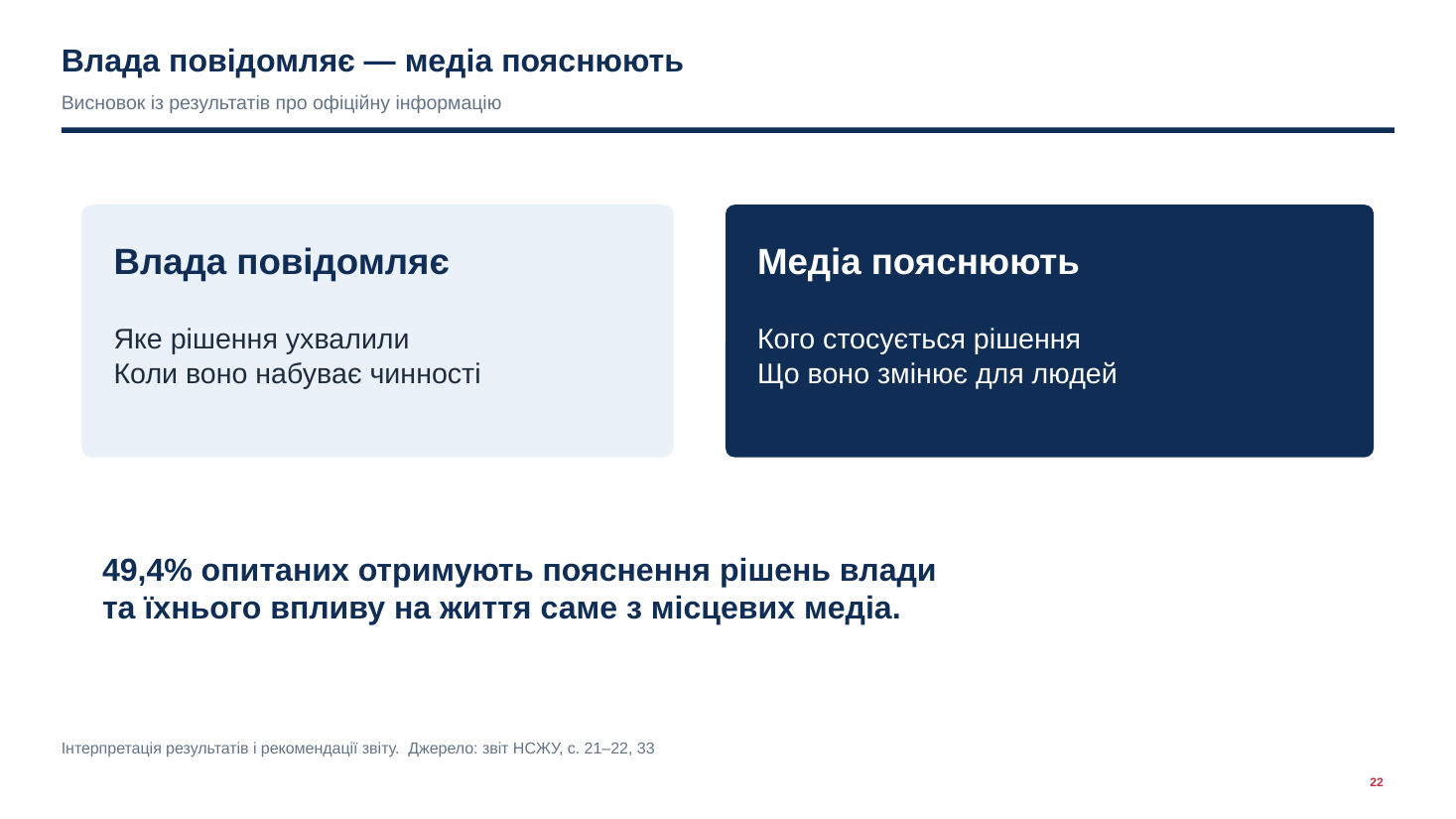
49.4% of respondents receive explanations of government decisions and their impact on life from local media - this is the most frequent answer. "We understand power outages when the reasons are properly explained," wrote a respondent from Sumy Oblast.
The researchers' conclusion: the government communicates the decision, the media explains what they change for the people
62.6% of respondents encountered false or misleading information during the year. Most often - in telegram channels, and it primarily concerned the situation at the front, that is, exactly what worries people the most. "There is a lot of information, I would like it to be true," wrote a woman from the Zaporizhzhia region. Hence another function of newsrooms: social networks signal - the media check.
Interest in life in the temporarily occupied territories became a new research block: 68.7% of respondents are interested in it to one degree or another. However, the sources of this information are fragmented, and 20.6% of respondents do not receive it at all. Vitaly Golubev called this topic the most difficult for newsrooms: the protection of sources and verification of information are crucial here, and according to the principle of "do no harm", the safety of people is more important than the completeness of the message.
The report contains ten practical recommendations. Among the main ones are regular practical explanations of the local security situation, materials on social benefits and compensations, explanations of the consequences of government decisions for the community, careful coverage of life on TOT and development of one's own brand on digital platforms.
Digital channels are a delivery method, professional journalism is a source of value
- We will not be faster than Telegram channels. But we can win the interest of the community by checking information, explanations and simple, practical, local benefits, - emphasized Vitaliy Golubev.
According to him, these data will help defend the need of local media for donor and state support: "It's not us who say it and the Union doesn't say it, it's the people who say it." The resolution of the Ukrainian-Swedish Frontline Press Forum, adopted on April 21, 2026, which recognized local media as a critical information infrastructure, was already based on the results of last year's research by the NUJU.
"We survive ourselves and help to survive"
- We are trying with all our might to keep our publications alive so that people receive verified information. Previous generations of newspapermen did not come across this, - noted Olga Makuha from the Chernihiv publication "Vist" during the discussion of the report.
Svitlana Tomash , editor-in-chief of "Noviny Horodnyanschyna" told how trust in the local press works. When people were outraged by queues to see doctors, the newspaper published an interview with the doctor. Soon, the editor heard in the queue how one patient reassured another: "I tell you: read our newspaper - you will know everything."
Iryna Voronkina ("New Life", Kharkiv region) said that for the third year in a row, the community pays about 300-350 subscriptions for preferential categories from the budget through a tender. And Nataliya Shutko ("Our Land") cooperates with three communities, each of which pays for up to 100 copies.
- Statistics show: people need the media, people need you. And people really do read the newspaper, - concluded the head of programs of NUJU Iryna Khromenko .
The full text of the report "Information needs of residents of the frontline territories of Ukraine" (2026):
Frontline Press is a program of direct support for frontline newspapers, which NUJU implements in partnership with the Swedish Media Business Association (Tidningsutgivarna, TU). The program supports 25 newsrooms from the frontline regions.
Information service of NUJU
The primary source is the National Union of Journalists of Ukraine
The site uses cookies. The necessary ones are required for its operation (entering the cabinet, saving your choice). We enable analytical and marketing data only with your consent - in accordance with the Laws of Ukraine "On Personal Data Protection" and "On Electronic Communications". Consent can be changed or withdrawn at any time. For more details, see the Cookie Policy and Privacy Policy .