How to talk to people in trauma: tips for journalists for a sensitive interview
NUJU9 minutes of reading
Share:
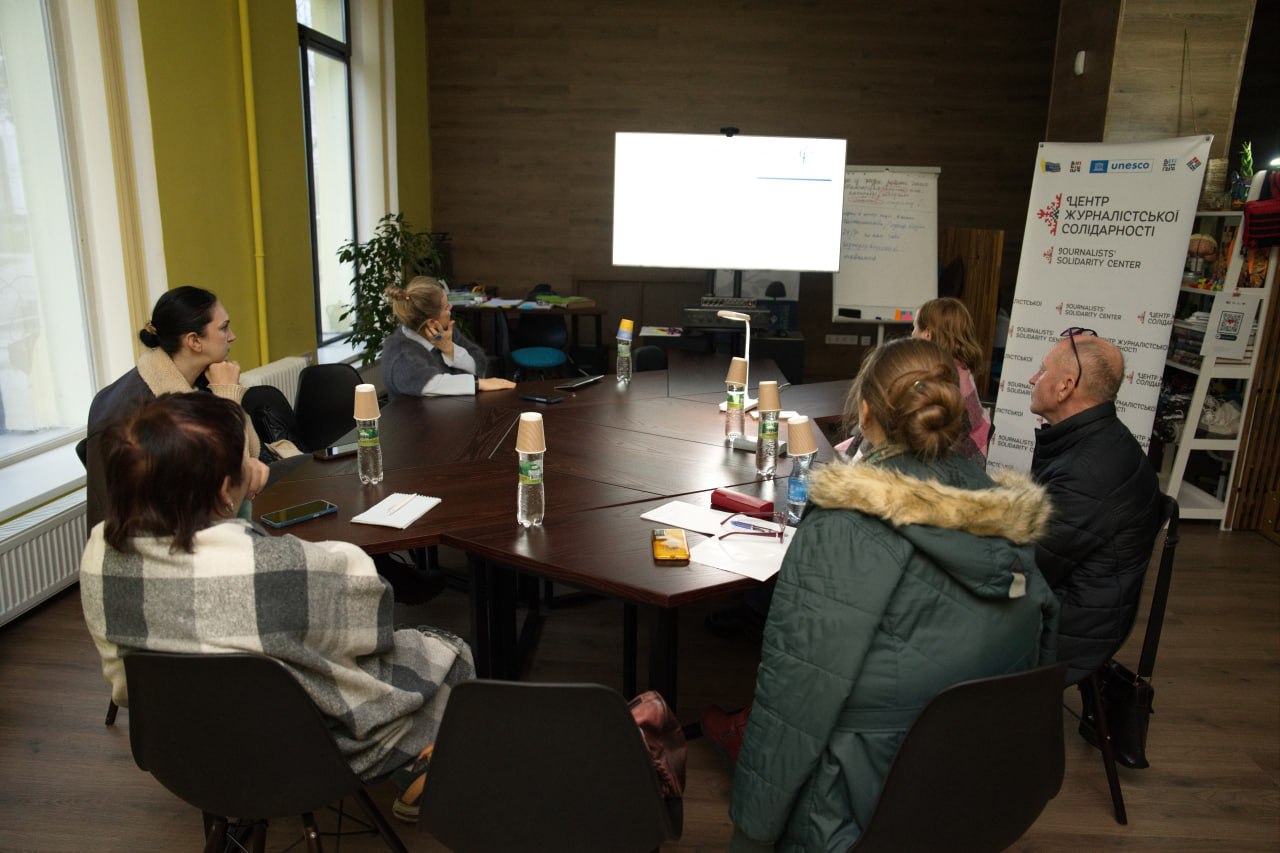
How to interview people who have survived shelling, occupation, loss of loved ones, violence, evacuation and other traumatic events. And the main thing is how to hear their stories without turning the journalistic conversation into a re-experiencing of pain. Media workers and public activists spoke about this duringthe eleventh training within the cycle dedicated to mental health and prevention of burnout, which wasorganized by the Sumy office of the Lviv-Suma Journalist Solidarity Center.
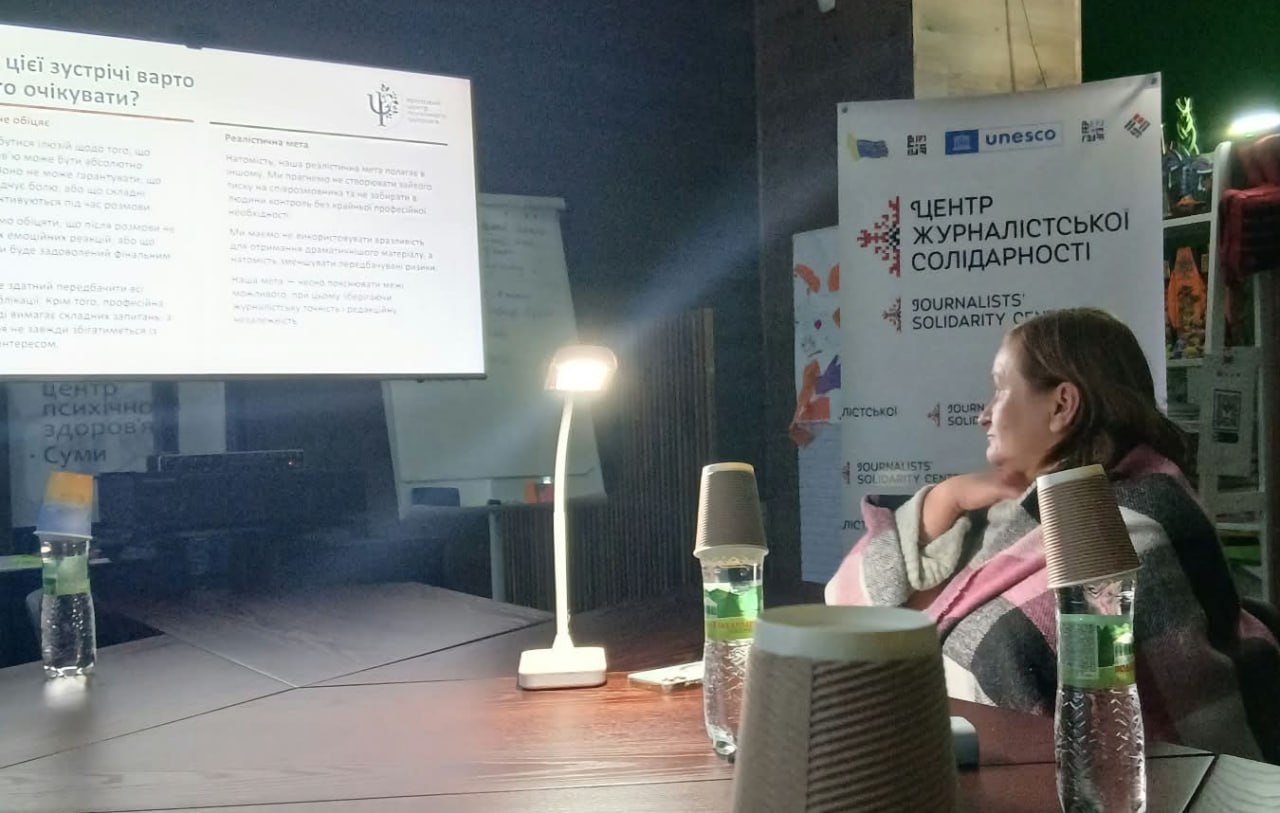
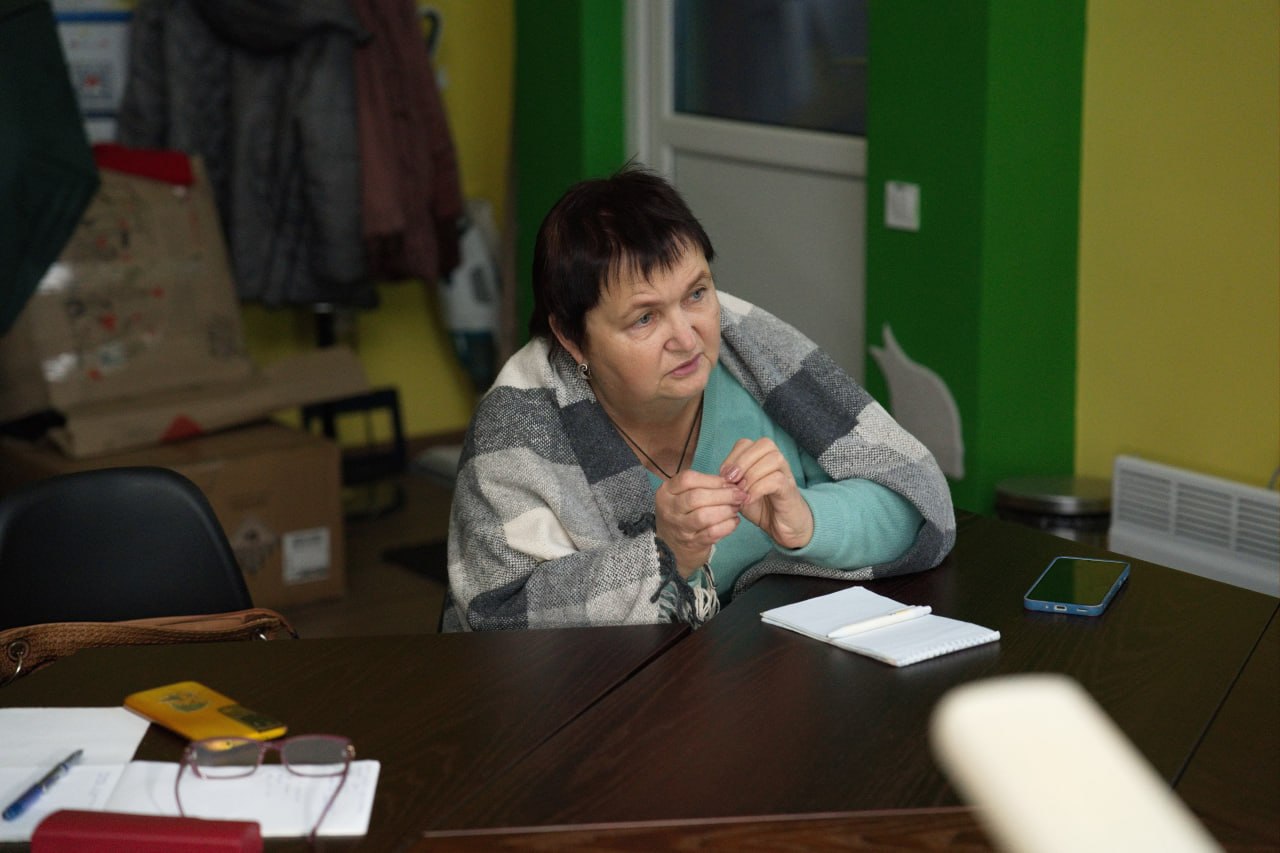
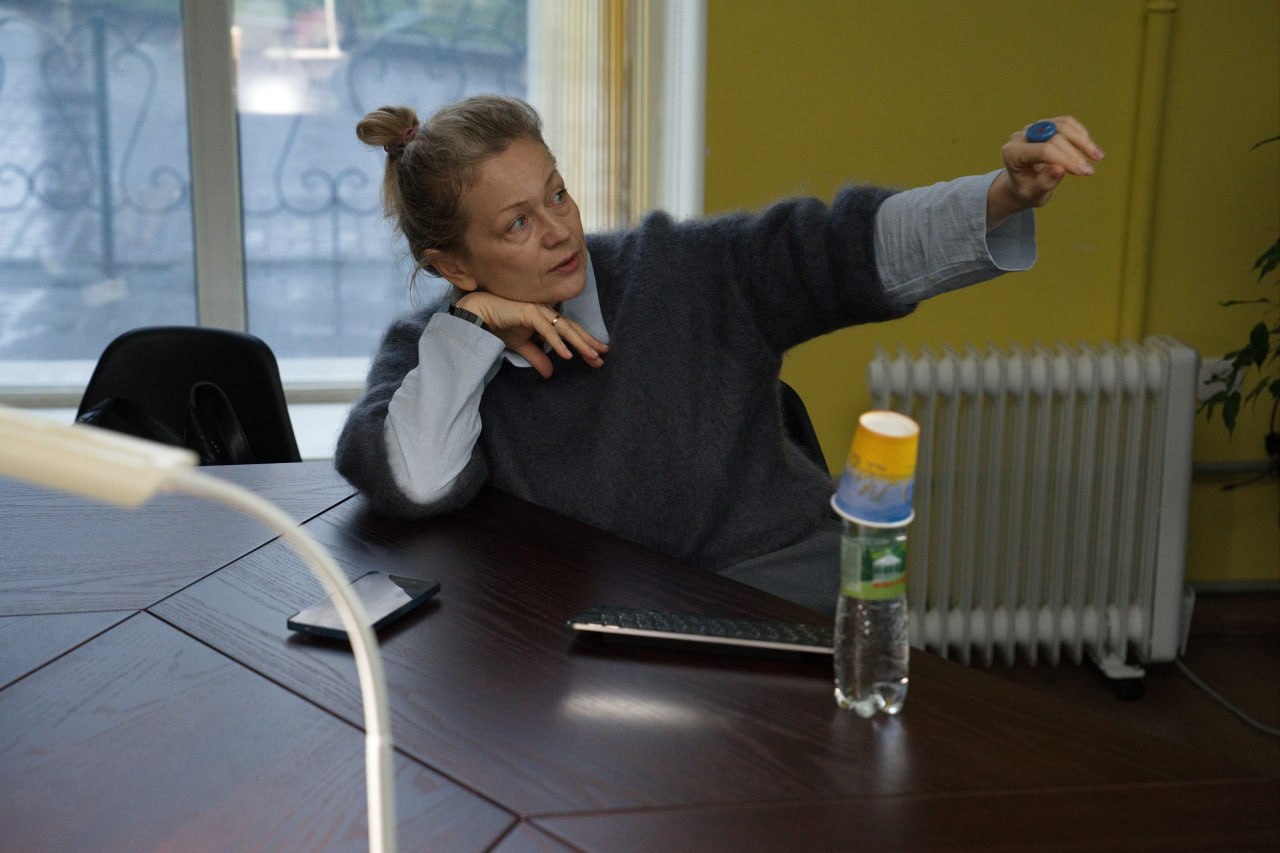
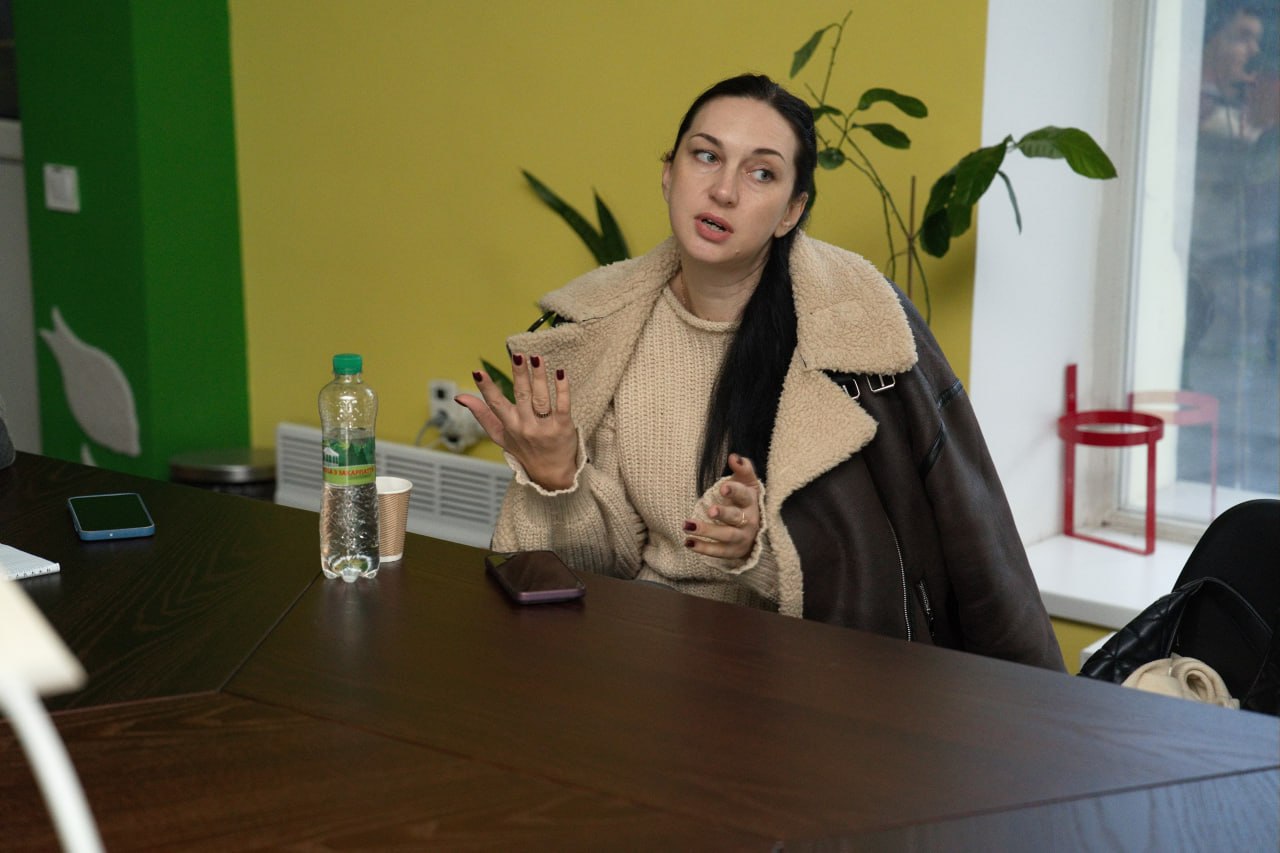
Meeting "Sensitive interview: how to talk to people in trauma" within the project "Expanding strategies, networks and tools for mental health and prevention of burnout for civil society in Ukraine". Oksana Ivantsova, trainer, group psychoanalyst, crisis psychologist, trauma therapist, head of NGO "Crisis Center for Mental Health" discussed with the participants - how to build such a conversation, what to pay attention to before, during and after the interview?
Not just to collect evidence, but to take care of a person's safety
"The first thing a journalist should realize is that an interview is never a completely neutral contact. It is the journalist who determines the topic and purpose of the conversation, asks questions, decides which words will be included in the material, how the story will be presented and when the conversation will end," Oksana Ivantsova began the conversation.
Instead, the interlocutor may be in an acute crisis, not know the specifics of editorial work, underestimate the consequences of publicity, or hope that publicity will help solve his problem. Sometimes a person agrees to an interview due to external pressure or unequal positions.
Therefore, the main question for a journalist is not only how to obtain a socially important testimony, but also how not to take advantage of a person's vulnerability in order to gain unlimited access to his experience.
"The trauma-informed approach suggests changing the very optics: instead of the critical 'What's wrong with you?' ask the question "What happened to you?". This does not mean that the journalist should determine the psychological state of the interlocutor or establish the presence of trauma or post-traumatic stress disorder. It's about understanding that experienced events can affect a sense of security, trust, memory, concentration and decision-making ability," the trainer said.
The journalists joined the conversation, adding that, in fact, any interview involves creating clear conditions for the conversation, explaining to the person his rights. And when communicating with a traumatized person, you should not pressurize them with questions, it is important to notice changes in their condition and be ready to pause or end the interview.
Consent is not just a "yes" at the beginning of a conversation
As before any recording, the journalist must explain who he is, which media he represents, why he wants to talk to the person, what the material will be about and where it will be published. It is also important to indicate whether audio or video recording will be made, or whether the name, image and voice of the interlocutor will be used.
A person should know that he has the right not to answer certain questions, to ask for a break or to stop the conversation. And this right should not be just a formality.
It is worth remembering that consent to an interview does not mean automatic consent to photography, video recording, disclosure of all details or use of any information without restrictions. It must be informed, voluntary, specific and relevant – that is, it must correspond to the real conditions in which the conversation takes place.
At the same time, the journalist must honestly outline the editorial boundaries. You should not promise the hero a final title, full approval of the material before publication or absolute anonymity, if the editors cannot guarantee it. It is also not possible to promise that the publication will necessarily lead to help, punishment of the guilty or solving the problem.
An important principle: offer the person only the control over the process that they can really provide.
The interlocutor can choose a convenient place and language of communication, the recording format, the presence of a close person, the pace of the conversation and the order of discussion of topics. He can refuse to answer a specific question. But the journalist must explain what decisions remain with the editors and what happens to the already recorded material if the interview is stopped.
A person does not always say "no" directly
The absence of a direct refusal does not mean that the interlocutor feels free and comfortable. Especially if he is under stress, depends on the help of a certain institution or came to the conversation at someone's request.
Doubts about the voluntariness of consent can be indicated by changes in behavior: a person suddenly begins to answer only with short "yes" or "no", constantly changes the topic, loses contact with the conversation, looks at the companion before each answer. Phrases like "I was asked to tell" or "I don't want to continue, but you have come" should also be alarming.
These signs in themselves do not prove that a person does not want to talk. But this is a reason to stop and question whether she is comfortable to continue.
It is also worth considering the inequality of positions. A person may agree to an interview because they hope to get help through publicity, fear losing support, or feel pressure from their family, community, or organization.
In such situations, the journalist should ask himself a simple but fundamental question: can this person really refuse to be interviewed right now, in these specific circumstances?
Ask openly, do not suggest answers
"One of the important principles of sensitive interviewing is to give the person the opportunity to first tell their story in their own words. You should not start with leading questions, offer ready-made answers or demand details for which the interlocutor is not yet ready," the psychologist noted.
You can start the conversation with a broad invitation:
"Tell me what happened in the order you remember it."
"Where does this story begin for you?"
"What do you remember about that moment?"
"What happened next?"
"Which of these did you see or hear yourself?"
Only after a free story is it appropriate to proceed to clarifications: find out the time, place, sequence of events, who was their participant and how the interlocutor knows certain facts.
"At the same time, a journalist should remember: a traumatic experience can affect autobiographical memory. A person is able to remember individual sounds, smells or visual images in great detail, but get confused about the dates, the sequence of events or the duration of the experience. During the re-telling, some details may change," said Oksana Ivantsova.
This does not automatically mean that the person is lying, hiding something, or has a mental disorder. It is important to distinguish between sincerity, accuracy and completeness of testimony: these are not identical characteristics.
The task of a journalist is to combine empathy with professional fact-checking. Do not turn emotion into evidence, but also do not perceive the peculiarities of memory as a person's desire to mislead you or distort history.
If a person cries, is silent or angry
During the conversation, the interlocutor may cry, become silent, freeze, become irritated or suddenly refuse to answer. In each of these situations, it is important for a journalist not to act automatically.
If a person cries. There is no need to hurry with the phrases "don't cry" or "you will get better." You should not touch the interlocutor without permission, bombard him with new questions or decide for yourself whether to continue the recording. It is better to offer a clear choice: “We can pause, end the conversation, or move on to another topic. What is more acceptable for you now?"
You can ask if they need water, a few minutes of silence, or if the person wants someone to be around. Tears in themselves do not mean that the interlocutor is not capable of making decisions. But this is a reason to give him back the opportunity to choose.
If a person is silent or freezes. Do not rush to fill the pause with new questions. Perhaps the interlocutor remembers the details, does not know the answer, does not understand the question or simply needs more time. Calmly remind what you talked about, offer a break or end the conversation. Stop the recording if necessary. Do not demand an explanation why the person does not want to talk.
If a person is angry. You should not get into an argument or try to prove yourself right. Calmly find out what caused the outrage: the question, the format of the interview, the previous material or the very presence of the journalist. If you really made a mistake, admit it. At the same time, it is important to maintain professional boundaries and not agree to offensive behavior. You can say, “I hear that my question made you angry. You may not respond. If you don't mind, explain what exactly was unacceptable about it."
If the person refuses to continue. Do not convince her with the phrases "we're almost done," "this is very important for society," "you've already agreed," or "the material won't work without this part." Refusal needs no excuses.
It is only necessary to specify whether the person wants to stop discussing a specific topic or complete the entire interview, whether the recording should be turned off and how to act with the information already received. But the rules for using the recorded material should be explained before the conversation begins, and not when the interlocutor refuses to continue.
A journalist is not a psychologist
A trauma-informed approach does not mean that a journalist should conduct a therapeutic conversation. His task is to create safer conditions for communication, explain the rules, notice changes in the state of the interlocutor, suggest a pause, adhere to agreements and check the risks of publication.
"You don't need to diagnose a person, try to "uncover" their hidden memories, convince them that it is useful for them to talk, or promise psychological relief after an interview. A journalist should not assume the role of a mental health specialist or the obligation to support the hero for a long time," said Oksana Ivantsova.
Humanity does not require crossing professional boundaries. On the contrary, understanding these boundaries protects both participants in the conversation.
Do not end the interview in the most painful place
Ending a conversation is just as important as starting it. You should not ask the most difficult question, get an emotional answer and immediately turn off the recorder and leave.
Give the person time to come back to the present moment. You can ask if she wants to add something, if there are topics that should not be returned to, explain what will happen with the material further. It is also important to clarify arrangements regarding identification, photo, video and recording use.
After the interview, the journalist must assess the risks for the hero: whether he can be identified by details that at first glance seem insignificant, whether the material does not reveal a dangerous location, personal data or information that could harm loved ones. Records and personal data must be securely protected.
And another important point is to take care of yourself. Working with testimonies of pain can be psychologically difficult for a journalist as well. Therefore, it is worth discussing difficult interviews with colleagues, not being alone with your feelings and, if necessary, seeking professional support.
Five rules to remember
1. A person does not lose the right to choose because of a traumatic event. She is not just a source of information, but a full-fledged interlocutor with her own limits.
2. Consent is a process. It needs to be explained and verified not only at the beginning, but throughout the interaction.
3. Open questions give space for your own story. Don't suggest answers or ask for details for emotional effect.
4. Empathy does not override fact-checking. Sincerity of testimony and its factual accuracy are different things.
5. Ethics does not end when the recorder is turned off. It covers editing, title, photos, data protection and all further use of the story.
A sensitive interview does not make journalism less poignant or less socially important. It helps to tell complex stories responsibly - so that in striving to convey the truth, one does not forget about the person who shares this truth.
The program is implemented by the National Union of Journalists of Ukraine together with Araminta gUG and the Action Office, offering strategies to protect mental health in conditions of high stress.
The Network of Journalist Solidarity Centers is an initiative of the National Union of Journalists of Ukraine, implemented in cooperation with the International and European Federations of Journalists, UNESCO, and with the support of the people of Japan. Our main goal is to help media workers working in Ukraine during the war. The centers work in Kyiv, Kharkiv, Zaporizhzhia, Dnipro, Lviv and Ivano-Frankivsk. This project is part of UNESCO's broader efforts to support the safety of journalists and freedom of speech in Ukraine.
Contacts of the United Center of Journalistic Solidarity Lviv-Sumy: 097 907 97 02 (Natalia Voytovych, coordinator of the Lviv Center, Volodymyr Sadivnychiy – coordinator of the Sumy Center,+0505822517 ).
Svitlana Shovkoplyas
The primary source is the National Union of Journalists of Ukraine
The site uses cookies. The necessary ones are required for its operation (entering the cabinet, saving your choice). We enable analytical and marketing data only with your consent - in accordance with the Laws of Ukraine "On Personal Data Protection" and "On Electronic Communications". Consent can be changed or withdrawn at any time. For more details, see the Cookie Policy and Privacy Policy .