"After the war, we still have to live and work": Kharkiv media workers learned to save people with CPR and a defibrillator
Kharkiv region4 minutes of reading
Share:
Six resuscitations followed, the longest of which lasted 48 minutes. Instructor Serhiy "Shaman" has such practical experience, who taught Kharkiv media persons cardiopulmonary resuscitation (CPR). His main argument in favor of such knowledge is simple: the war will end, and diseases will not disappear anywhere.
"We still have to live and work after the war. And diseases will not disappear anywhere, so knowledge of CPR will be in great demand," says Serhiy.
Media workers are used to preparing for the dangers of war: knowing where to shelter, having a tourniquet and a first-aid kit, working with drone detectors, monitoring aerial threats. But there are other risks. Journalists work in crisis situations, communicate with people who have experienced shelling, losses and severe stress, and record emotional interviews. In such circumstances, it is important to be able to notice if someone nearby has suddenly become ill, and to know how to act.
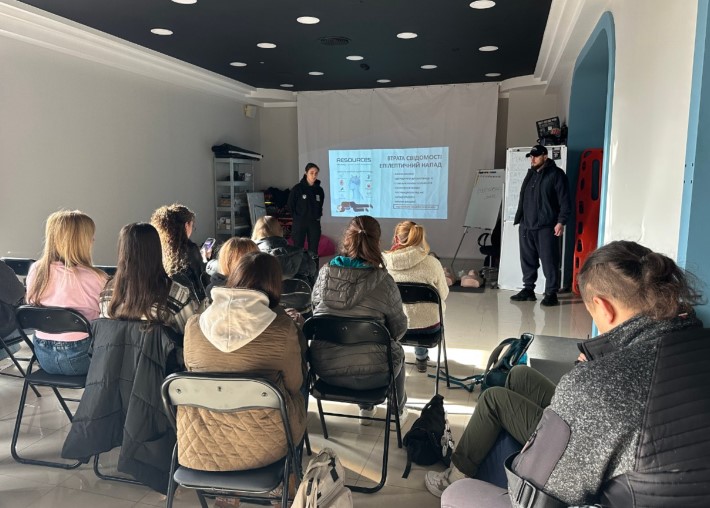
That is why the Kharkiv Center for Journalistic Solidarity (NUJU) together with the team of the International Center for Security Solutions "RESOURCES" organized the training "Basic life-saving skills: cardiopulmonary resuscitation" for media workers.
The heart is also a risk zone: why media professionals need this knowledge
Instructor Serhii Shaman explains: strong and prolonged stress affects the body, and cardiac arrest can occur even in a person who previously had no serious health problems. Older people and those with heart disease need special attention.
Serhiy has six resuscitations under his belt. The longest lasted 48 minutes. Therefore, he speaks about the importance of quick reaction and correct actions not only as an instructor, but also based on his own experience.
"The effectiveness and percentage of human survival during resuscitation depends on how quickly and qualitatively actions were taken. Even if you called an ambulance, it will take some time. If you start providing help in time, a person has a great chance to survive," the instructor emphasizes.
For journalists, this knowledge is also important when working with people. After experiencing shelling or loss, the interlocutor may be so excited that he will not pay attention to his own well-being. And a journalist who knows the signs of critical situations can spot danger in time and guide a person on what to do next.
"It is very important - vitally important - that someone who is conscious is around, someone who understands what to do," concludes Serhiy Shaman.
Instructor Daria also emphasizes that everyone needs first aid skills, regardless of profession and age. After all, the consequences of war will not disappear with the end of hostilities.
"Unfortunately, heart problems have become younger. A lot of stress, upheavals. This is really important," she says.
Six hours of practice: mannequins, compressions and working with a defibrillator
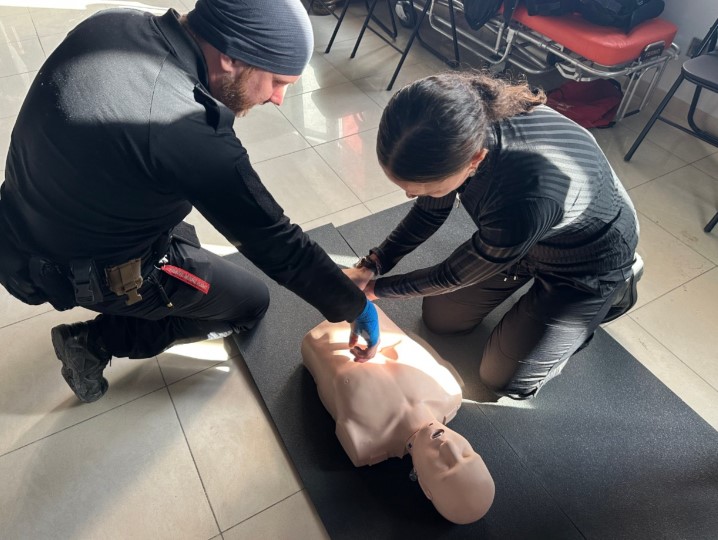
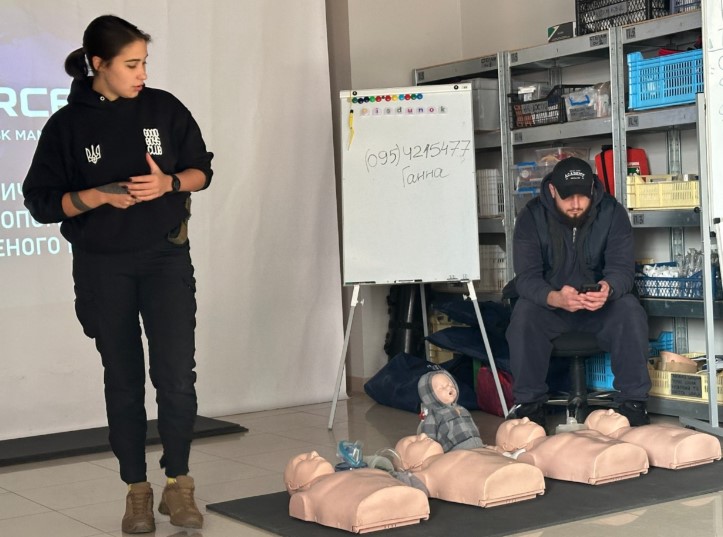
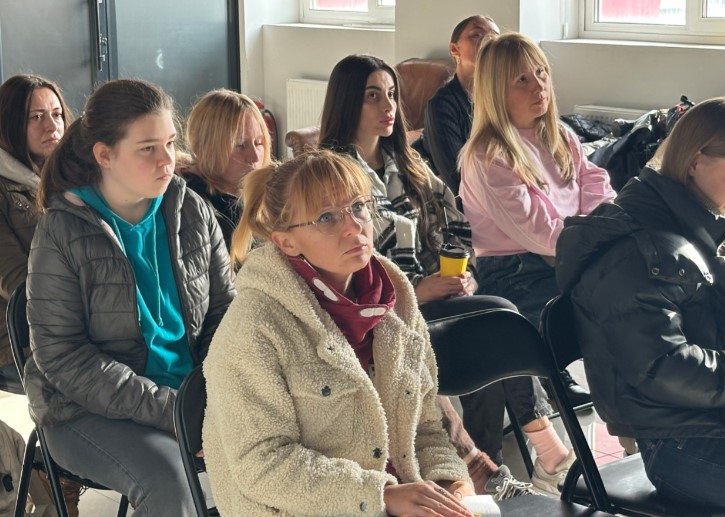
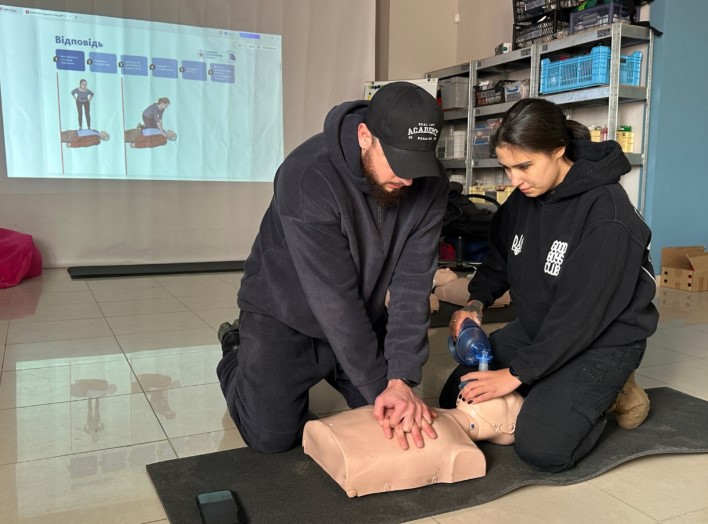
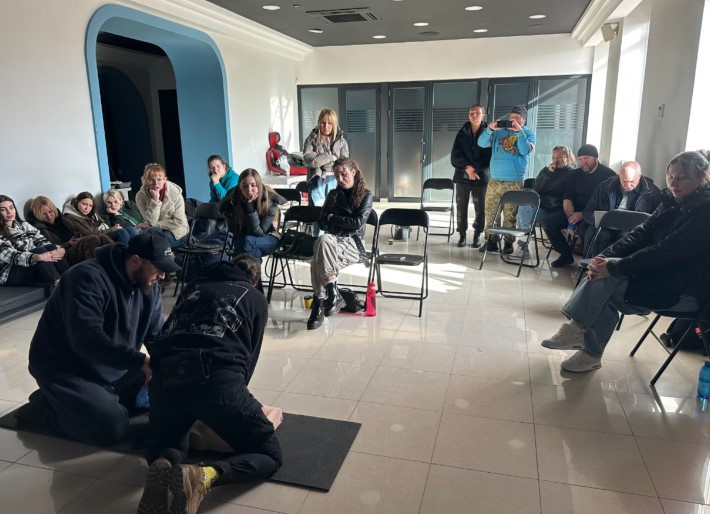
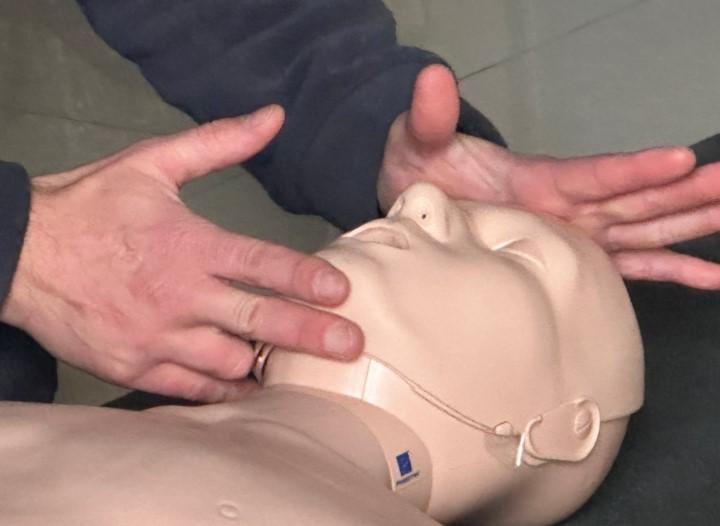
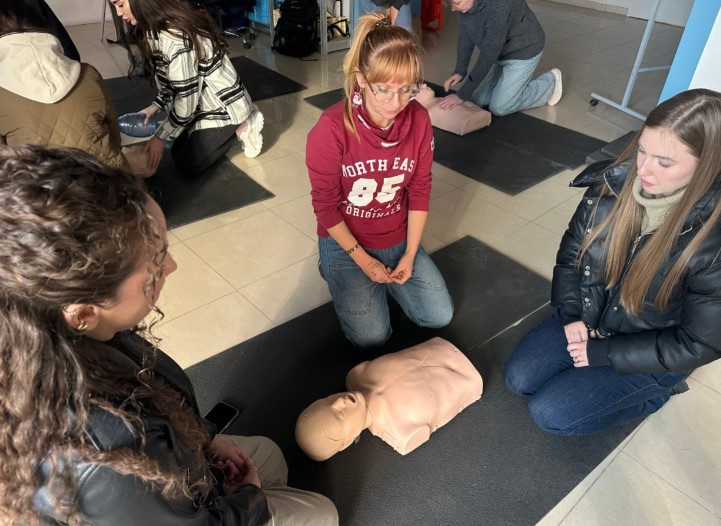
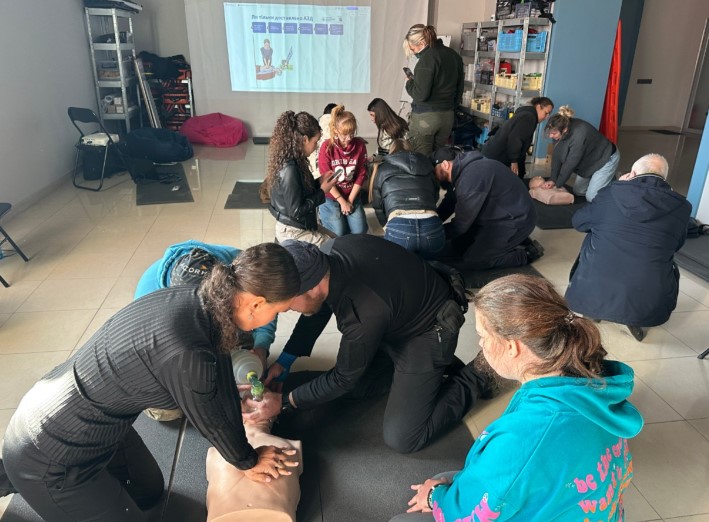
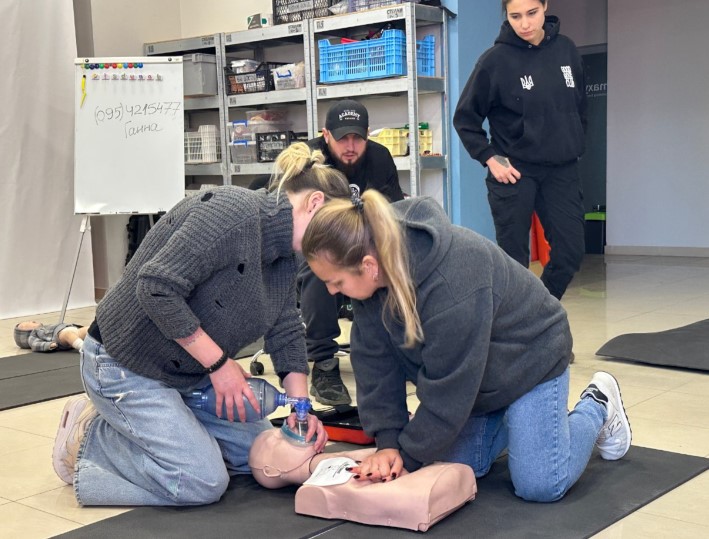
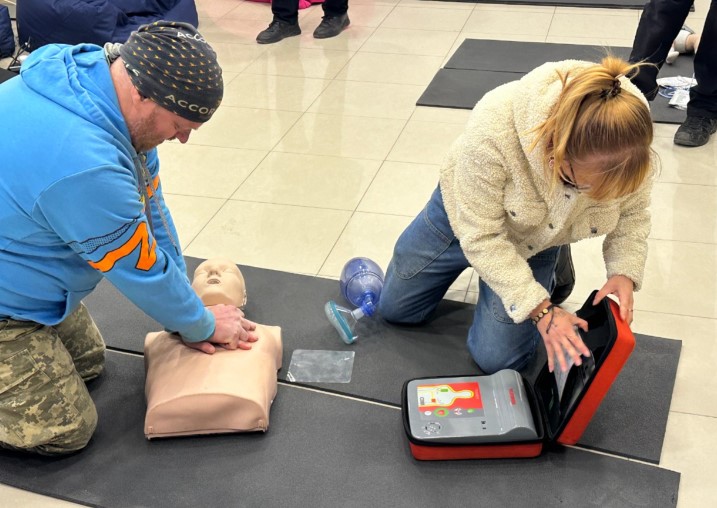
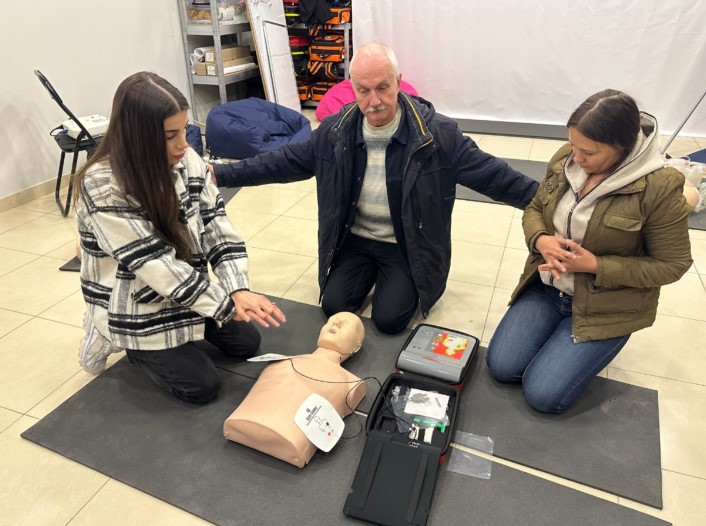
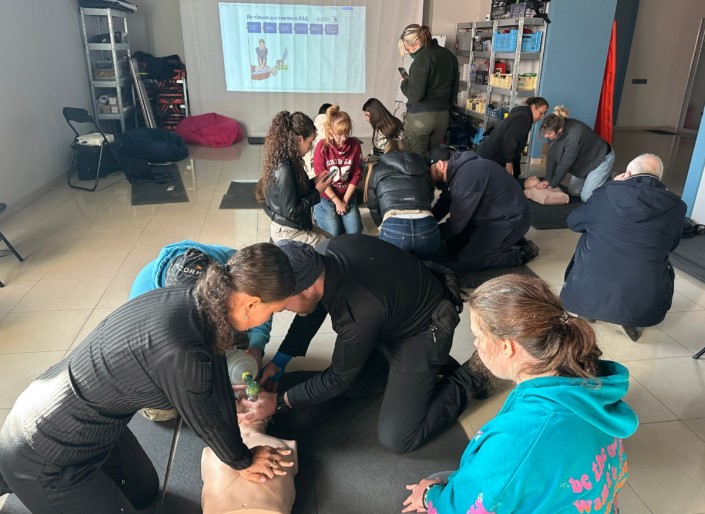
The study lasted six hours. Media workers did not just listen to the instructors, but practiced their skills on mannequins: they practiced chest compressions and artificial respiration, and learned how to use an automatic external defibrillator (AED).
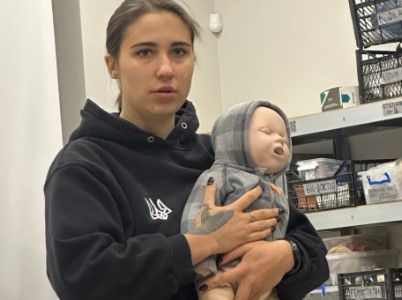
It was explained to the participants how to recognize the stoppage of blood circulation and critical conditions, to help a person in case of suffocation, to transfer the victim to a stable lateral position. They also considered the specifics of providing assistance to various categories of victims.
For journalist Oleksandra Sufiyanova, this was the first training in cardiopulmonary resuscitation.
"The program made it possible to clearly learn the algorithm of actions in a critical situation and to acquire practical skills necessary for saving lives," she noted.
Journalist Anastasia Nalivaiko from the Kramatorsk Post has already attended several security courses. However, it was at this training that I got the opportunity to work with a defibrillator for the first time.
"It was extremely interesting, because no course I had been able to attend before was like this. But this skill can be extremely useful," Anastasia shared.
Journalist Serhii Ermakov from the Kharkiv news agency "Chroniki" also drew attention to the work with the defibrillator. By education, he is an electronics engineer, so the practical part with the equipment was of particular interest.
"It was extremely interesting to electrocute a person," Serhii joked.
Five things about CPR that a media person should remember
After six hours of training, there are five important conclusions that should be adopted by everyone who works with people and may find themselves next to a victim.
1. Do not leave a person alone in a critical condition. Assess the situation, check the reaction of the victim and call for emergency medical assistance.
2. Do not waste time. During circulatory arrest, the speed of resuscitation is of great importance.
3. Know how to perform chest compressions. Theory is not enough - the correct technique must be practiced practically.
4. Do not be afraid of the defibrillator. It is important to know why you need an automatic external defibrillator and how to act on its voice prompts.
5. Update your knowledge regularly. Even if you have already been trained, repeated practice helps to better consolidate the algorithm of actions.
The event was implemented within the framework of cooperation between the NSSU and the independent organization for freedom of speech and independent media FreePressUnlimited(FPU).
Contacts of the Center for Journalistic Solidarityin Kharkiv -phone: 093 813 75 44 (coordinator Hanna Chernenko).
Kharkiv State University
The primary source is the National Union of Journalists of Ukraine
The site uses cookies. The necessary ones are required for its operation (entering the cabinet, saving your choice). We enable analytical and marketing data only with your consent - in accordance with the Laws of Ukraine "On Personal Data Protection" and "On Electronic Communications". Consent can be changed or withdrawn at any time. For more details, see the Cookie Policy and Privacy Policy .