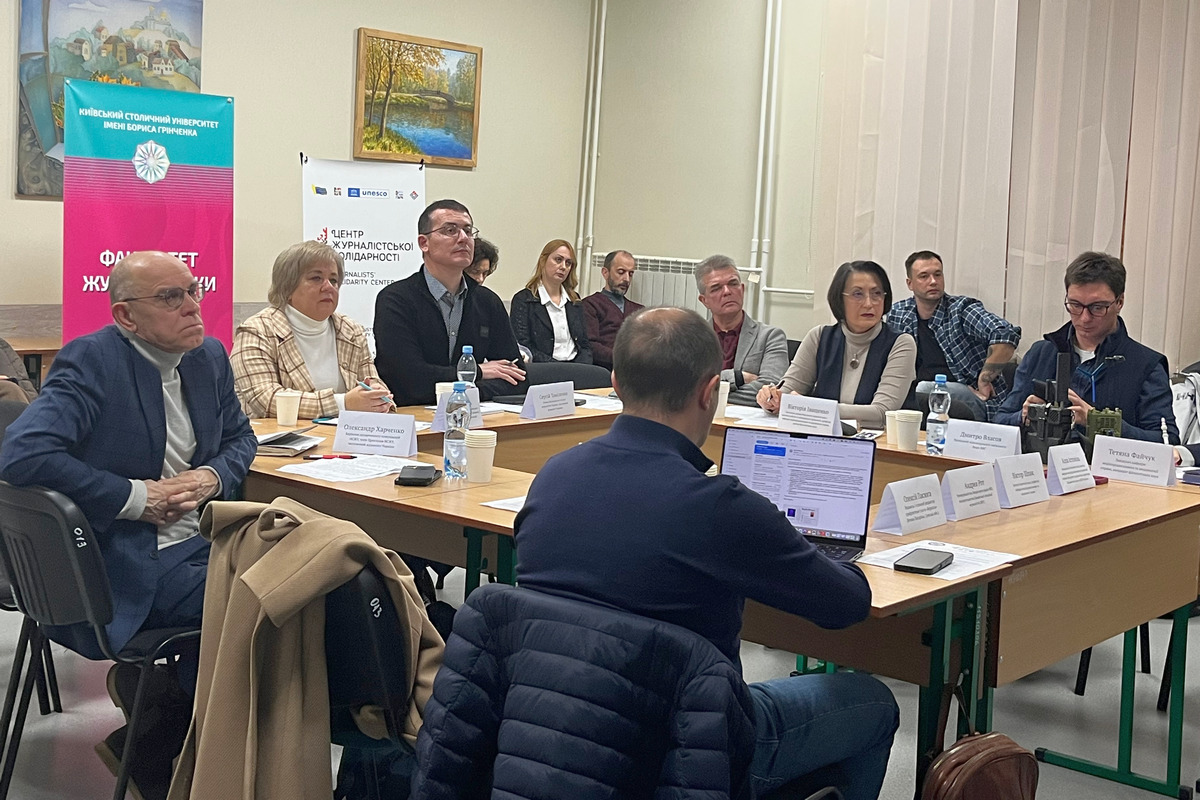
On November 19, they talked about the peculiarities of the work of journalists during the war in the shelter. A security auditorium was opened at Borys Grinchenko Kyiv Metropolitan University, where the NUJU and the Faculty of Journalism signed a memorandum of cooperation for five years during the round table "Media and publishing business during the war".
The auditorium will become a partner site of the Kyiv Center for Journalistic Solidarity of the National Academy of Sciences for lectures, security trainings and meetings with practitioners.
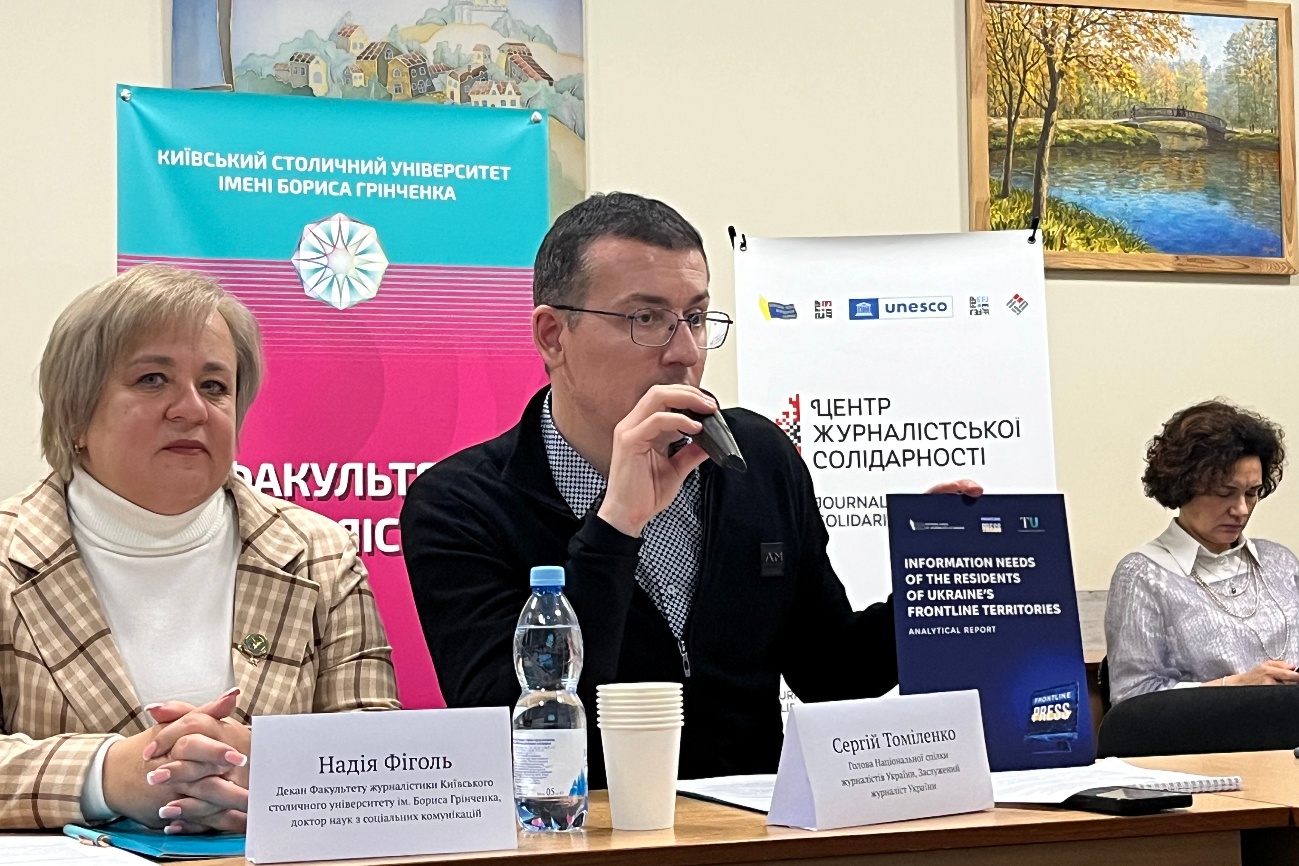
As noted by the head of the NUJU, Serhii Tomilenko , who moderated the event, in the eight months of 2026, the NUJU documented 28 incidents with drones against journalists and newsrooms.
- Drone detectors, bulletproof vests, safety training are the same basic tools as a camera and a voice recorder - Tomilenko stressed. The union's main advice is to remove the "PRESS" stickers and not to mark cars.
At the same time, according to a study by the NUJU, residents of front-line communities trust the local media the most (59.4%), although 77% read Telegram.
- Social networks signal, the media explain, - concluded Serhii Tomilenko.
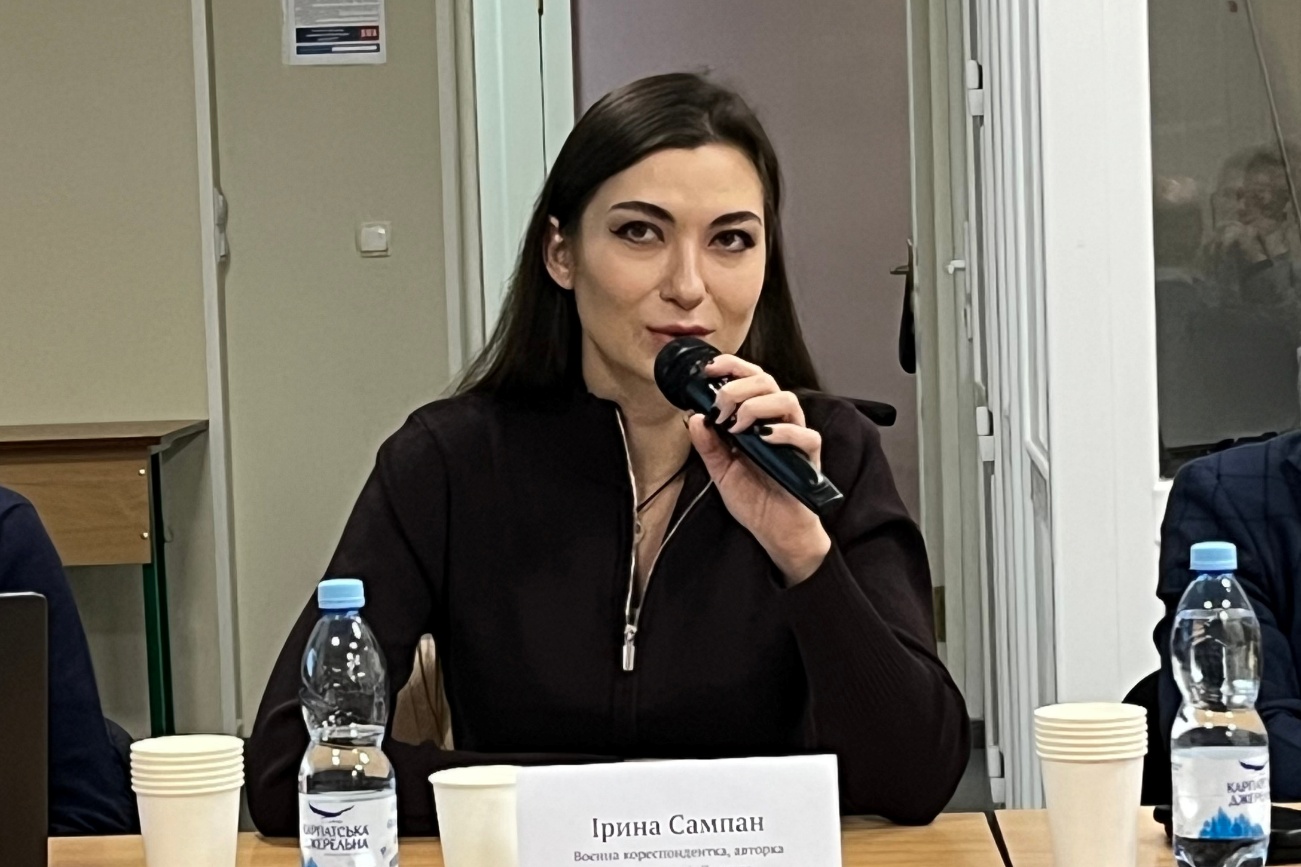
War correspondent Iryna Sampan , the author of the project "On the line of fire", told about a recent business trip: a night crossing through the Siverskyi Donets on fishing boats, 50 kilometers on foot, a mine explosion.
- If artillery and snipers wanted to kill us by 2022, now literally everything wants to kill you, - she said.
According to her, the success of one's own project depends on the journalist's training, constant presence in the epicenter and the ability to "sell" oneself, because "independent journalists are poor journalists."
Iryna Sampan
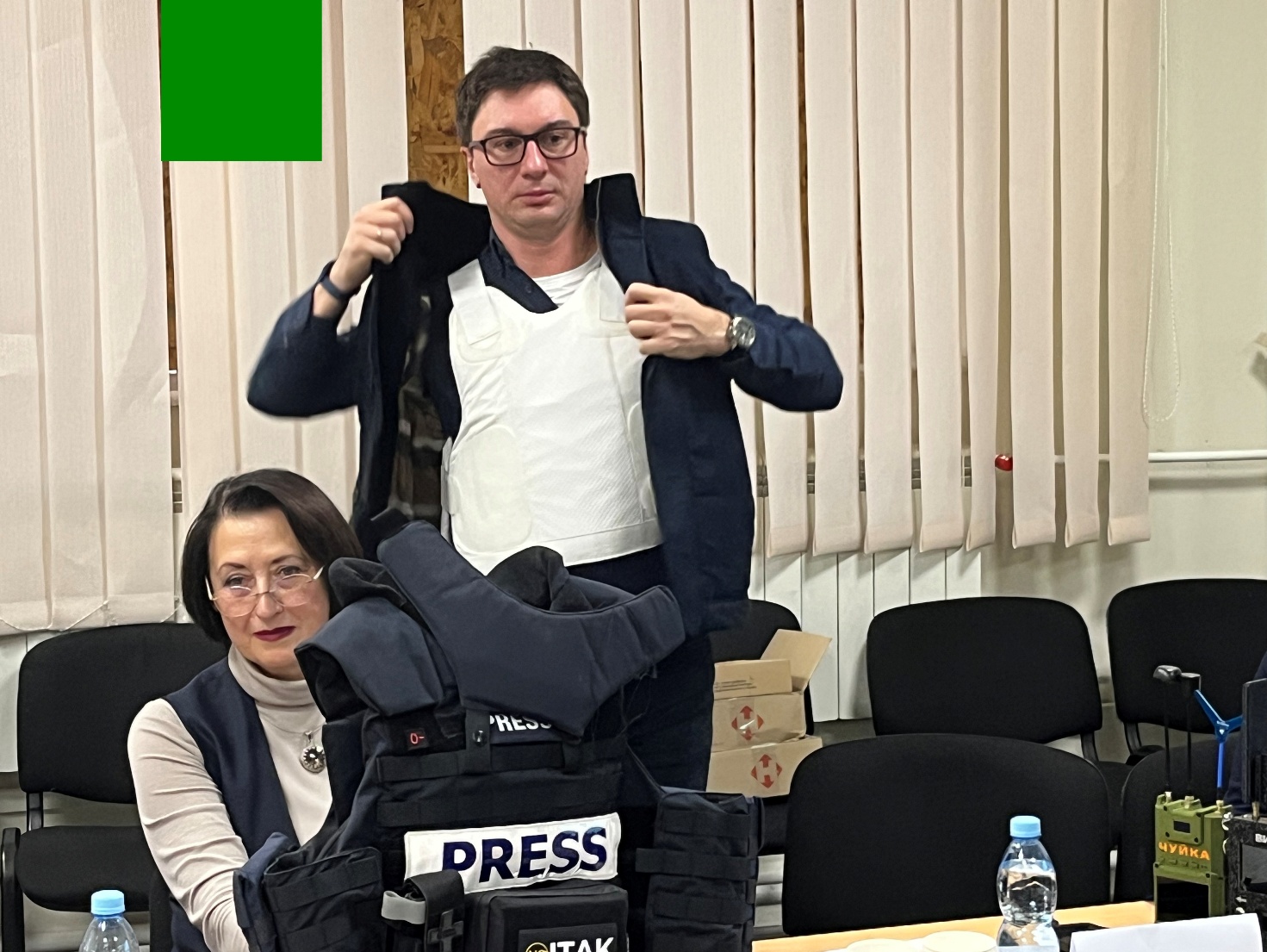
Dmytro Vlasov, a video journalist of the Kyiv Bureau of the BBC, explained that the "PRESS" sticker today means a priority goal. "The editorial office is responsible for the person," he emphasized. In his opinion, security and tactical medicine should be taught at the university, so that journalists do not learn in the field. Both soldiers received drone detectors provided by UNESCO from NUJU.
Journalists often do not wear a heavy 10-15 kg bulletproof vest, so Dmytro Vlasov showed a lighter one, about 2 kg, which can be worn under clothes.
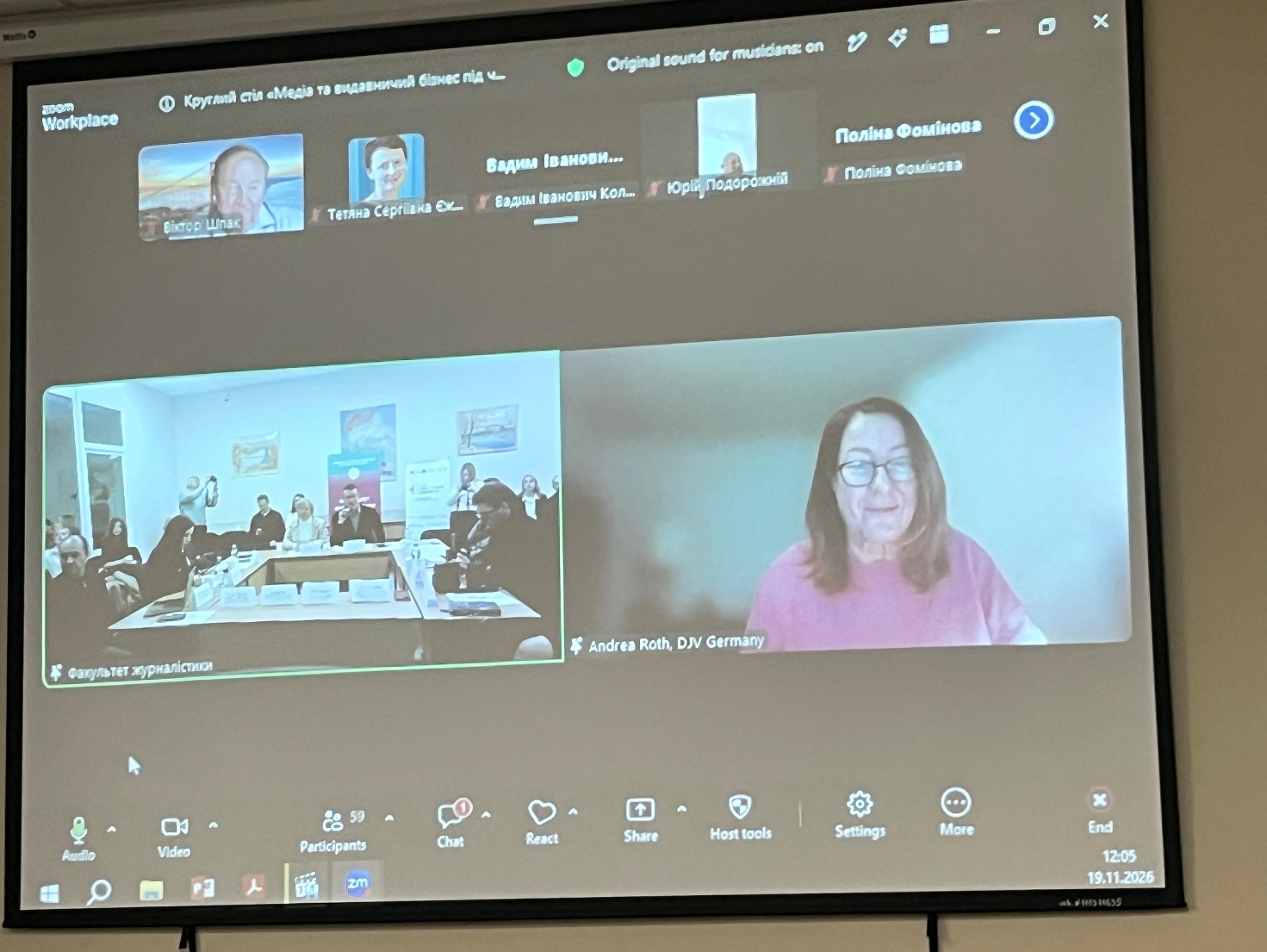
Andrea Roth - TV journalist of Bavarian Radio, vice-president of the Bavarian Association of Journalists and member of the Steering Committee of the European Federation of Journalists - spoke online. German colleagues learned from the head of the German Union of Journalists Mika Boister , who visited Kyiv this year, that Ukrainian journalists still lack women's bulletproof vests. "This worried us the most," she admitted.
Andrea Roth is one of the founders of the International Advisory Board of the Centers of Journalistic Solidarity of the National Academy of Sciences. The council is seeking multi-year funding, drone detectors, bulletproof vests and psychological support for the centers.
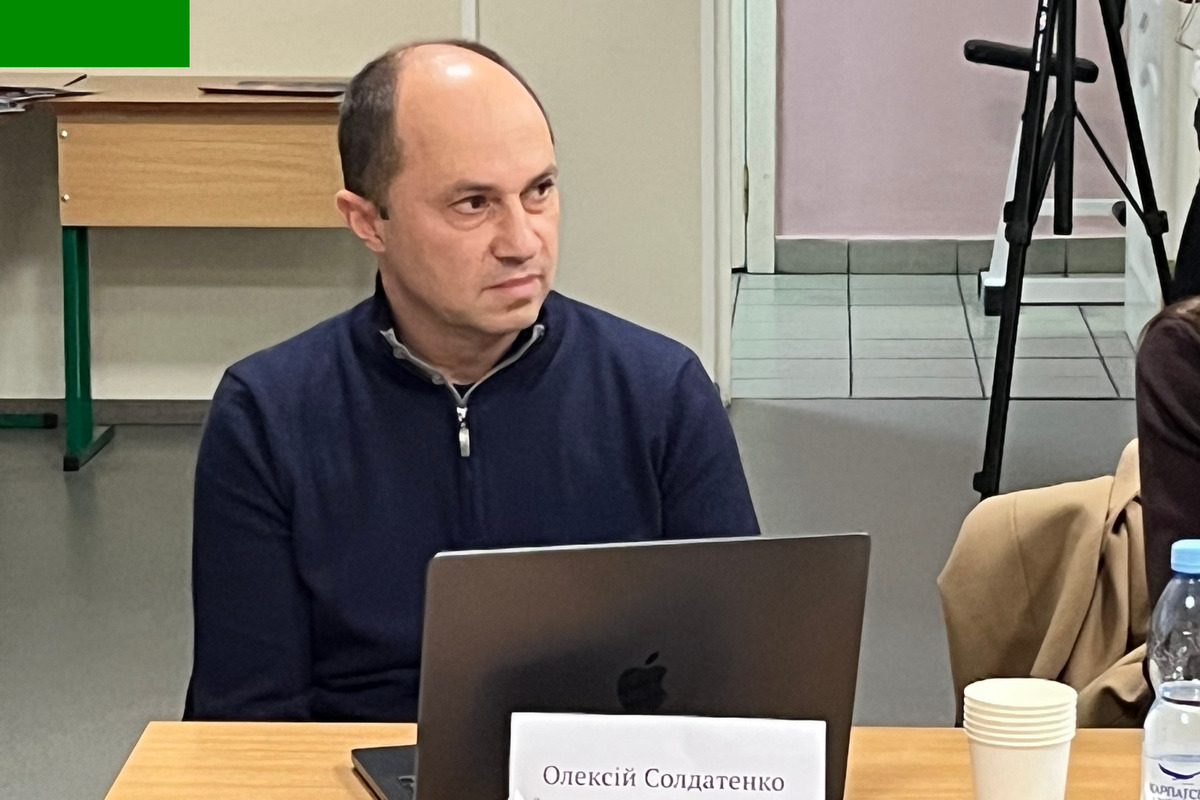
In the 25 frontline newsrooms of the Frontline Press program, their own revenues cover an average of only 49% of expenses. However, none of these newspapers stopped during the year. Oleksiy Soldatenko, director of IRMI programs, told how local media are looking for their own money and moving from a newspaper to a multimedia editorial office. According to the IRMI study, 89% of local media talk about complete psychological exhaustion, and only 3% can work without serious financial constraints.
Oleksiy Soldatenko
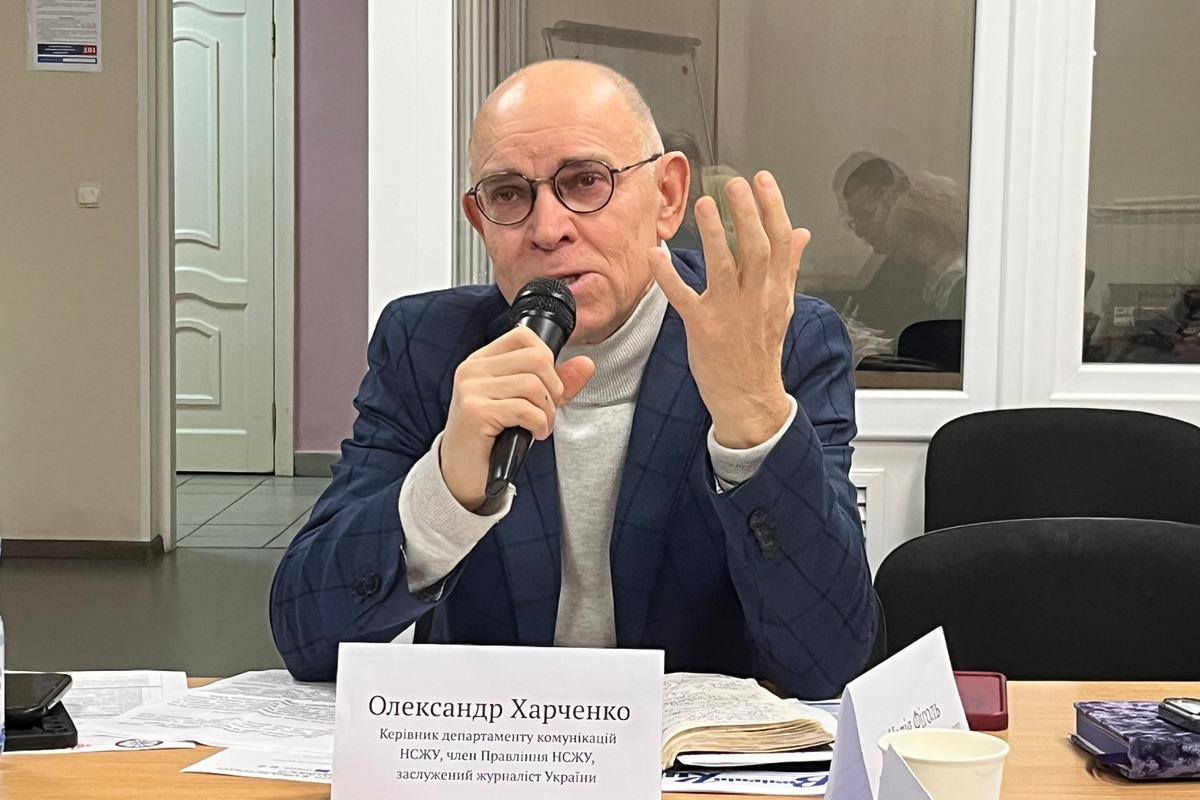
Oleksandr Kharchenko, the head of the communications department of the NSHU, member of the Board of the NSHU, explained how front-line stories break through the "sympathetic burnout" of Europe: instead of numbers, there are specific people. For example, a scientist from Askania-Nova, who was declared a "bioterrorist" by the FSB, or a fighter from "Dante" and his Beatrice. These stories are translated into English and offered to Western editors.
Oleksandr Kharchenko
Faculty teachers, in particular, Professor Viktor Shpak , emphasized the importance of practical training of journalists. Deputy dean Viktoriya Ivashchenko offered to create a dictionary of security journalism together with NUJU.
The event ended with the showing of the documentary tape of the NUJU "We're going because they're waiting for us" about Oleksiy and Natalia Pasyug. After the relocation of the editorial office, they publish the newspaper "Vorskla" and deliver it to the border villages of Sumy Oblast using drones.
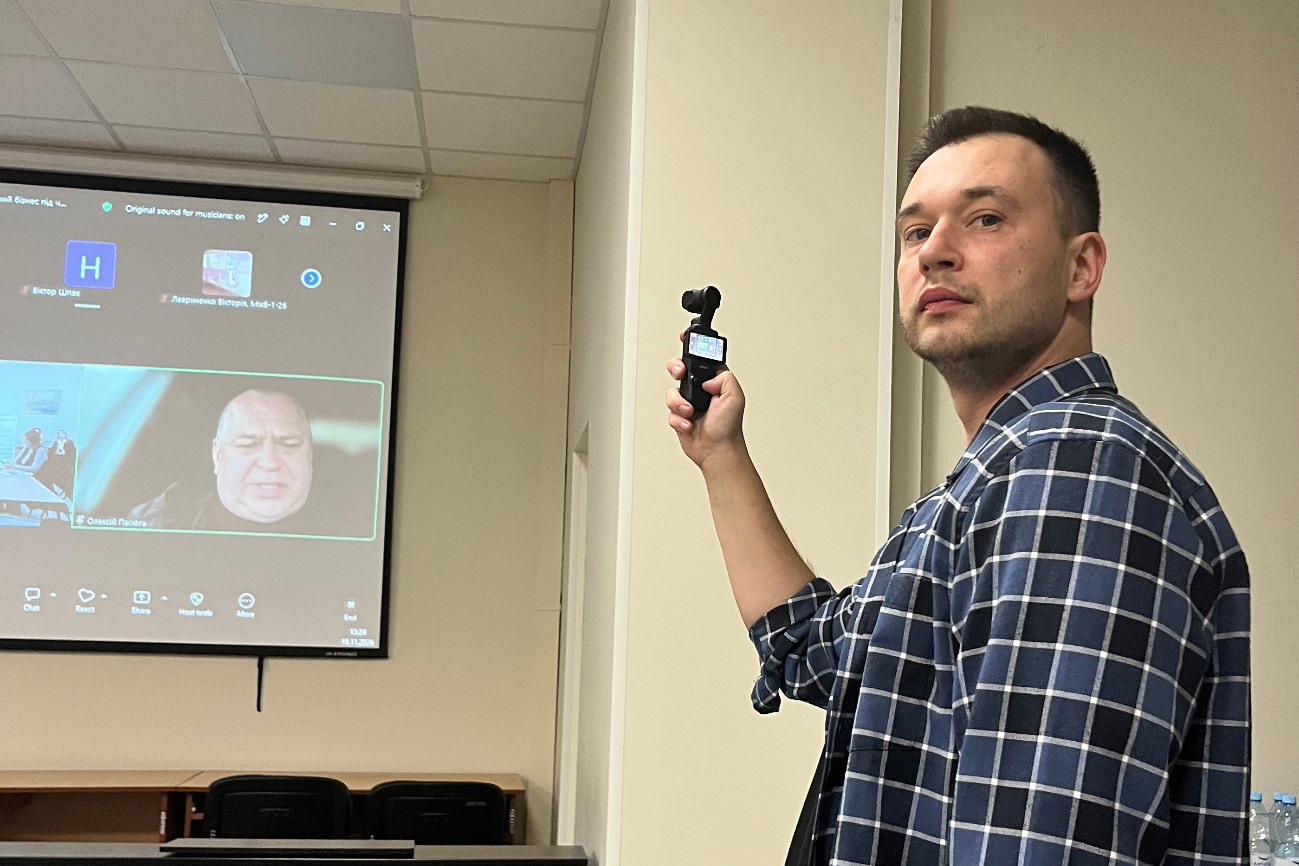
Oleksiy Pasyuga joined the round table online just from the road. He said that in 2022, the support of NUJU helped to continue the work of the editorial office. Today, "Vorskla" earns more from social networks than from the printed edition. However, paper is not abandoned: in some villages, it is the only source of information.
The director and cinematographer of the film, Yevhen Cherevko, called the main thing he saw in his characters "responsibility for two".
Evgeny Cherevko
Information service of the NUJU, photo: Nataliya Evdokymenko / NUJU
The primary source is the National Union of Journalists of Ukraine
The site uses cookies. The necessary ones are required for its operation (entering the cabinet, saving your choice). We enable analytical and marketing data only with your consent - in accordance with the Laws of Ukraine "On Personal Data Protection" and "On Electronic Communications". Consent can be changed or withdrawn at any time. For more details, see the Cookie Policy and Privacy Policy .