"From the grant office to Scanwords": how the "Horodok.City" editors turned ChatGPT into a daily assistant
NUJU14 minutes of reading
Share:
A small team, several media platforms and a constant lack of time - these are the conditions under which the Horodok.City editorial office works in Khmelnytskyi. Here, artificial intelligence has become not just a tool for writing texts, but an assistant in finding topics, preparing TV and radio materials, developing YouTube, working with advertisers, grant management, and even proofreading newspaper columns.
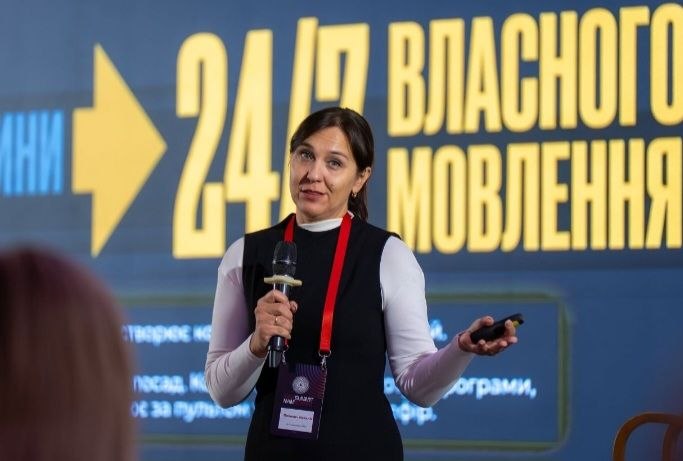
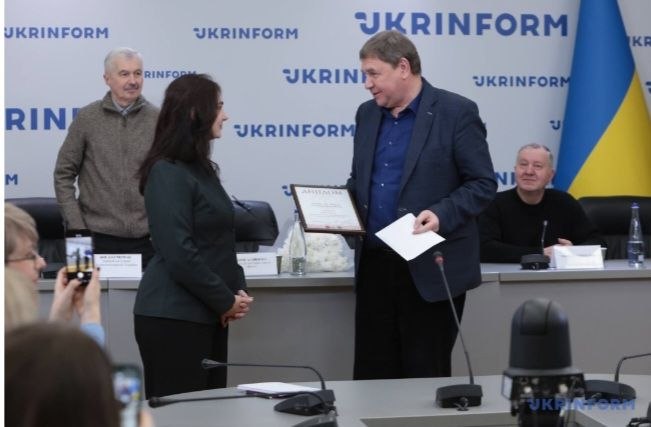
The editorial office presented a presentation of practical experience during the meeting of participants of the Frontline Press project ,a joint initiative of the National Union of Journalists of Ukraine and the Swedish Media Business Association (Tidningsutgivarna,TU). The editor-in-chief of Horodok.City Nataliya Popovych joined the conversation with 25 media - a participant of another program of the NSSU "Your audience is your strength" , which is implemented thanks to cooperation with the Ukrainian Media Fund Nordic.
Iryna Khromenko
- Synergy in action: media representatives of the two projects of the NUJU share practical cases, find common ideas and prove that together we are capable of more, - emphasized project coordinator Iryna Khromenko. - Such a combination of initiatives gave impetus to an important exchange of experience, which will strengthen other local media.
One assistant - many editorial tasks
- We are a multimedia editorial office. We have a website, television, radio and newspaper. That is why we use artificial intelligence very actively. We are few, but there are many platforms. And AI helps us in each of these directions, - says Nataliya Popovych .
The main editing tool is the paid version of ChatGPT. Separate projects were created here for different tasks, actually forming a whole system of assistants: for finding sources and topics, preparing stories, working on texts, SEO, newspaper layout, grant opportunities, advertising proposals and other needs.
The first direction, with which the editorial day begins, is information monitoring and topic search.
– We have configured ChatGPT to monitor and search for topics. We receive potential options for publications from him every morning. It monitors messages from official structures - the police, the State Emergency Service, the Prosecutor's Office, as well as local Facebook groups connected to monitoring, in particular "Overheard Town", where community residents discuss problems, share information, pay attention to what worries them, the editor explains.
Natalia Popovych
AI does not just retell what it has seen, but provides links to original sources and posts that may be of interest to the editor. For example, if people are actively discussing low-quality road repairs, journalists can immediately see where the discussion arose, what exactly readers are writing and which source they can turn to. Such monitoring is especially valuable for a small city, where it is not easy for the editors to find new topics every day. It also happens that there are no noticeable information sources in the community itself. Then ChatGPT offers to see what is happening in other towns of Khmelnytskyi region, for example in Slavut, and think about whether it is possible to adapt an interesting topic to the needs of the Horodotsk community. Therefore, the editorial office receives not only information about what has already happened, but also hints for future publications.
Dictation instead of typing: how an editor speeds up the preparation of materials
Another direction that Natalia Popovych actively uses personally is the preparation of journalistic texts using voice dictation.
- I read my material aloud and immediately explain to ChatGPT: do not change my style, do not change the structure. As I read to you, so you publish this material. It's much faster for me than typing.
The editor decodes the recorded comments of the interlocutors using Pinpoint. Then ChatGPT gives specific instructions, exactly where in the text you need to use this or that fragment of the transcript, which words or sentences to insert. Gradually, the tool was taught to take into account editorial features: site style, punctuation rules, spelling of surnames. As a result, he forms a coherent material from dictated text and comments.
However, the finished article must undergo editorial review.
- I sit down, reread, compare all dates, surnames. Although he has already learned our surnames, he makes fewer and fewer mistakes. If he does not know something, he can write what needs clarification, - says Nataliya Popovych.
So far, this way of working in the editorial office is mostly used by the editor-in-chief herself. Colleagues are not yet used to this format. But for her, it became an opportunity to quickly prepare an article and move on to the next tasks.
SEO, stories, YouTube: from text to finished information product
In the editorial office, the use of ChatGPT for search optimization of materials was brought to automation. As soon as the article is ready, it is uploaded to the chat and asked to prepare the necessary SEO package. Titles, descriptions, variants of wording - all this is received by the editorial office much faster. If, for example, you need to shorten the title to 60 characters, the tool performs this task almost instantly.
- Of course, it happens that we revise the proposed options, it happens that we choose what suits us. But it significantly saves time, the media woman is convinced.
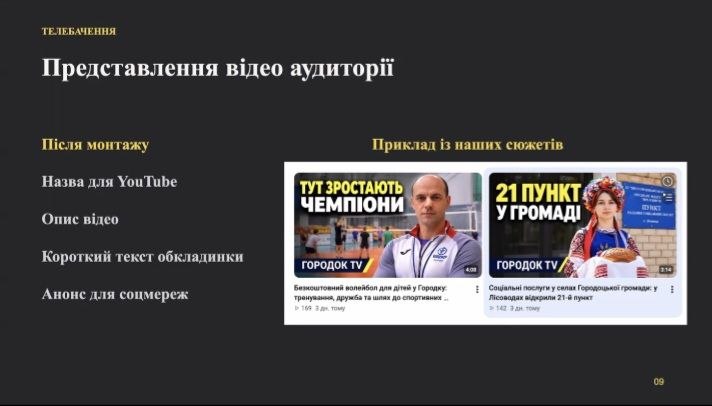
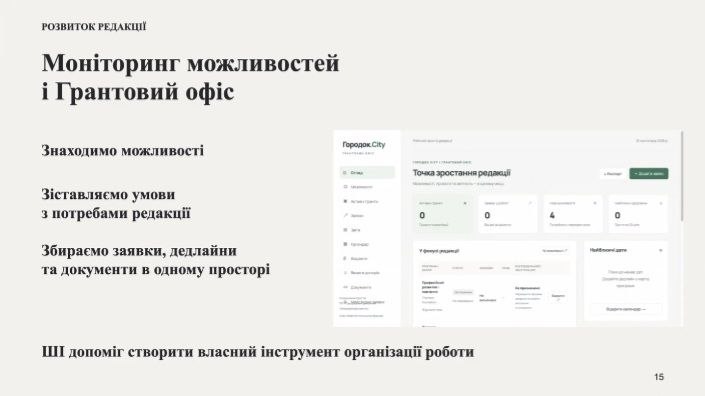
Photo / screenshot from the presentation
For the television direction, ChatGPT helps to compose plots, to think through the transitions between parts of the material and comments, to build the logic of information releases. According to the relevant requests, he can form a list of plots, propose names for them and determine the sequence of information presentation.
AI is also actively used for the development of the YouTube channel. Here he helps with the preparation of covers, titles, descriptions and SEO optimization of videos. Natalia Popovych notes that after the implementation of this approach, the audience of the channel began to grow actively. Visual design also contributed to the recognizability of editorial materials.
Radio: search for partners and free content
On the radio, ChatGPT is used to find thematic sections and prepare scripts. But there is also a less obvious application - the search for potential partners who can provide the radio station with free audio materials and broadcasts.
- We set it up so that it makes a selection of potential partners every week. Then we choose who to contact and talk about cooperation, - Nataliya Popovych shares her experience.
Thanks to this search, the editorial office has already established cooperation with Polish radio, from where it receives free broadcasts in Ukrainian. She also agreed on cooperation with radio stations in California, planning joint preparation of materials. According to Natalia Popovych, this approach can be used much more widely: not only for radio, but also for finding partners, exchanging content and new opportunities for various media platforms.
Scanword from your own publications: how to turn a game into an audience engagement tool
One of the most interesting ideas of the editorial office is the use of artificial intelligence to create weekly scanwords in the newspaper. Moreover, their peculiarity is that the questions are formed exclusively on the basis of Horodok.City's own publications.
- We have prescribed the appropriate prompt and provide ChatGPT with 12 links to materials from our site. He creates a scanword for us for the newspaper, - says the editor-in-chief.
Why is this necessary? First of all, to attract readers to the site. After all, in order to find the right answers, they will have to review publications, recall facts, and find the necessary information. But the editors conceived not just an entertainment column. Scanword should also become a monetization tool. Nataliya Popovych said that she had already agreed with local business partners about the prizes for the winners. It can be a burger, pizza or other gifts from community establishments and shops. The mechanism assumes that readers will send solved scanwords, and the winner will be chosen randomly using an online service. Information about the partner who provided the prize appears in each issue of the newspaper.
In this way, the editorial office combines several tasks at once: it returns the reader to its own publications on the website, encourages him to interact with the newspaper, creates an additional reason to wait for the next issue, and offers local businesses a non-standard advertising format.
Newspaper layout under AI control: two hours instead of a whole day
The experience of using ChatGPT when checking the finished newspaper layout can be important for colleagues in the media.
It was here that the editor recorded, perhaps, one of the most tangible results of saving working time.
- If before I used to proofread a newspaper all day, rereading it several times, now it takes two hours, - emphasizes Nataliya Popovych.
How is this process organized? The finished PDF layout of the newspaper is uploaded to the chat and instructed to check it for errors. Moreover, the editor configured the tool so that it not only reports on flaws, but also returns a PDF file with color markings.
The system of distribution of comments is as follows:
Red color - mandatory correction or critical error. These may be incorrect data, inaccuracies, missing words or other things that must be corrected. If there is doubt about a certain fact or figure, AI separately asks for clarification.
Purple color is a recommendation for editing. These are suggestions that the editors can accept or reject depending on their own understanding of the text.
After receiving such a file, the editor processes the comments: corrects what is necessary, analyzes the recommendations, and leaves unchanged what it considers inappropriate. The edited layout is then re-uploaded to check that all edits are correct and that nothing has been missed. It happens that the designer did not make a correction somewhere or put it in the wrong place. AI also sees this, shows where the error remained. According to Nataliya Popovych, most often we are talking about technical flaws: missing letters, incorrect hyphenation, small mistakes that a person may not notice even after several careful re-readings.
At the same time, the editors do not hand over the design of the newspaper or the placement of materials on the columns to artificial intelligence. This is done by the designer and the editorial team.
- We tried to give artificial intelligence a design. But, to be honest, I didn't like what he offered, Nataliya Popovych admits. - Therefore, the designer makes the design, we also determine the placement of materials and their adaptation ourselves. We only give him to check the finished result.
In fact, AI here plays the role of an additional corrector that helps to detect what may escape the human eye. The final decision on each correction remains with the editors.
AI as a partner for brainstorming: new advertising offers for local businesses
Another direction that the editorial office is actively developing is the use of ChatGPT to find non-standard advertising solutions.
Recently, Horodok.City launched a sales department and hired an advertising manager. So there was a need to look for new formats of cooperation with local entrepreneurs.
In this process, AI is primarily used as a brainstorming partner. They describe the specific business, activity, product features and their own wishes to him. In response, several proposals are received, which are then discussed by the whole team. An advertising manager and journalists are involved in this. Usually, every AI idea is well thought out. It gives a certain hint, and media people are already developing it further.
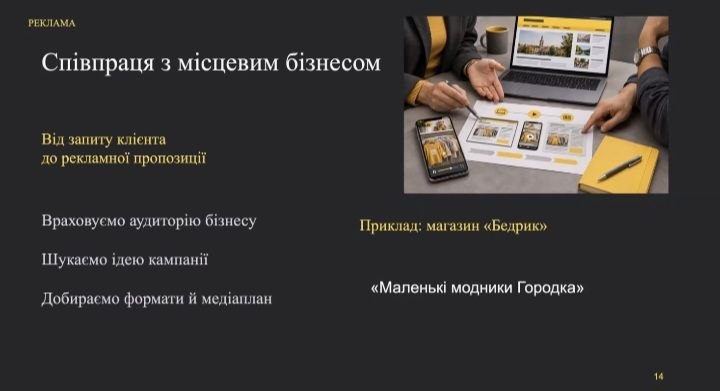
Photo / screenshot from the presentation
Natalia gave an example of cooperation with the children's clothing store "Bedryk". Initially, ChatGPT offered a small fashion show involving two or three children who would show off the store's clothes in front of the camera. The editors developed this idea on a much larger scale: they agreed with the school to hold a fashion show with the participation of almost the entire elementary class. The store becomes a sponsor of the event, children demonstrate clothes, and the media prepares a video that draws attention to the retail establishment.
- The store is interested in this, because perhaps the children's parents will come to buy clothes. We are interested, because we will make a video, and all this is sponsored by the store, - explains Natalia. - That is, the small idea proposed by ChatGPT, after our discussion, turned into an opportunity to get additional readers and earn money.
This example demonstrates well how AI can help not only in the editorial but also in the commercial work of the media by suggesting an initial idea. But its finalization, adaptation to local conditions and implementation are the business of people.
Grants Office: Finding opportunities to meet editorial needs
Natalia Popovych created a separate project in ChatGPT to monitor grant opportunities.
Its task is to relieve the editor of the need to browse dozens of platforms independently every day in search of new contests.
During the setup, she entered information about the values of the editorial office, directions of work, plans, ideas and projects that she would like to implement. ChatGPT now helps you select opportunities that meet exactly those needs. It is important that the tool helps not only to find grant announcements, but also to pre-analyze the terms of participation. In particular, check whether the editorial office can submit to the competition as a private enterprise, whether it is intended exclusively for public organizations, whether the project meets the stated priorities of the donor, and whether the submission deadlines are relevant.
Photo / screenshot from the presentation
- AI shows that a new opportunity has appeared, where exactly, what is the deadline. I immediately download the conditions of the competition and it analyzes how the donor's values coincide with ours, whether his goal corresponds to our tasks, - says Nataliya. - This is how we find points of contact. At the same time, it takes time to read the terms and conditions yourself and analyze everything. And here he immediately gives me the previous picture. I have already checked his work several times - so far there has been no case that the AI has suggested an irrelevant deadline or a competition in which we cannot participate.
Therefore, such an assistant allows the editorial office to more systematically seek financial support and not miss opportunities due to lack of time.
Not everything can and should be entrusted to artificial intelligence
Natalia Popovych paid special attention to the editorial policy of using AI. Horodok.City developed a corresponding document with the support of the NUJU project and thanks to the mentorship of Vitaly Golubev . In it, it was determined for which tasks the editorial office uses artificial intelligence, what it absolutely cannot be entrusted with, and who is responsible for various areas of work. The editors deliberately do not give AI independent access to social networks and do not allow it to automatically publish or distribute materials. Although the team was interested in the possibilities of AI agents, underwent appropriate training and even tested automation, they decided to abandon this approach. The reason is errors, twisting of facts and invented details.
- For example, we wrote an article, and he came up with a question in the outline, the answer to which can supposedly be found in the material. But there is no such information in the article itself. You read and understand that he simply invented something that didn't exist, Nataliya Popovych notes.
Therefore, the editors left the adaptation of materials for social networks, the creation of summaries and control over their compliance with publications.
During the discussion of Natalia's experience, colleagues also drew attention to the need to clearly limit tasks for AI. In particular, in the prompts it was advised to use wording such as: "Do not invent anything extra", "Work only with the provided data", "Do not change or paraphrase quotes". This is especially important for journalistic materials, where the accuracy of facts, figures, names and direct quotations is a prerequisite for professional work.
A small team in which everyone knows more than one profession
During the discussion, the participants of the meeting were also interested in how many people the editorial office needs to implement such a large number of ideas. Natalia Popovych said that eight people work in the team: the editor-in-chief, two operators, two journalists, a designer, an accountant and an advertising manager. The deputy editor is currently on maternity leave. The team works according to the principle of interchangeability and universality.
- We cannot be only a journalist or only a cameraman. Our cameraman will go to the shooting without any problems and, if the journalist does not have time or the opportunity, will record comments, - says the editor-in-chief. - The journalist can go to the shooting herself instead of the cameraman. Our advertising manager has only been working for a month, but she is already shooting videos and hosting her radio show. She is interested, she looks at her colleagues and also wants to try.
The editors encourage employees to learn new skills, test hypotheses and experiment.
The story of team rejuvenation turned out to be interesting. As part of the "Your audience is your strength" project, Natalia planned to create a youth editorial office. However, it turned out to be difficult to involve schoolchildren in systematic work: young participants could not always devote enough time to it and responsibly perform editorial tasks. At first, the editor took it as a failure. But later the result turned out to be even better than expected. One of the young participants stayed to work in the editorial office, along with her came the cameraman, and later the advertising manager. Now the young journalist is independently responsible for TikTok: she generates ideas, prepares and publishes videos. The editor no longer has to check every day whether the next video has been released, because she is sure that the employee will do her job. The TikTok audience is growing, advertising orders are appearing.
- I was very disappointed when it was not possible to create a youth editorial office. And now I understand that the gain is much greater. Instead of three students who could come from time to time, we have three full-time young workers, - Nataliya Popovych rejoices.
This story was another confirmation that the development of local media depends not only on technology, but also on the readiness of the team to change, learn and attract new people.
The experience of Horodok.City shows that artificial intelligence can become an assistant in very different editorial processes - from the morning search for topics to the last check of a newspaper issue. It can free up time for journalistic work, suggest new formats of interaction with the audience, help find advertisers and grant opportunities. But the most important thing remains unchanged: technology offers, analyzes, prompts and checks, and people make decisions. It is the editorial team that determines what to publish, what facts to trust, what ideas to implement and what it is ready to answer to its readers.
***
FrontlinePressis a joint initiative of the National Union of Journalists of Ukraine and the Swedish Media Business Association (Tidningsutgivarna,TU),launched at the end of 2025 to support independent local and frontline newspapers working in regions under constant Russian shelling and information pressure. The six-month program included 25 newsrooms from Kharkiv, Donetsk, Sumy, Zaporizhzhia, Kherson, Dnipropetrovsk and other regions. In addition to financial support, newsrooms receive professional mentoring support, consultations on the development of newsrooms, assistance in preparing materials for an international audience, as well as the possibility of direct communication with Swedish media partners. The initiative was a response to the critical situation in which local media near the front found themselves: newsrooms work in conditions of constant drone and missile attacks, power outages, infrastructure destruction, psychological exhaustion and a sharp drop in the advertising market.
Project"Your audience is your power"NUJU implements with the supportof UkrainianMediaFundNordic,has become one of the key areas of work of NUJU to support local and regional media in 2025-2026.Its goal is to help newsrooms not only to survive in the conditions of war, but alsoto build stable ties with their communities, to better understand the needs of readers and to turn the audience into an active community around the media.
Lyudmila Maznova
The primary source is the National Union of Journalists of Ukraine
The site uses cookies. The necessary ones are required for its operation (entering the cabinet, saving your choice). We enable analytical and marketing data only with your consent - in accordance with the Laws of Ukraine "On Personal Data Protection" and "On Electronic Communications". Consent can be changed or withdrawn at any time. For more details, see the Cookie Policy and Privacy Policy .